
Complete Guide by Stone Expert Ankit Singhal
Marble is one of the most luxurious and timeless natural stones used in homes, hotels, villas, temples, and commercial spaces. From elegant white marble flooring to premium Italian marble walls, marble instantly adds beauty, value, and sophistication to any space. Yet many homeowners and builders face one frustrating issue after a few years — marble cracking.
You may have seen hairline cracks on marble flooring, broken marble corners, surface fractures near joints, or complete slab damage in expensive interiors. This often leaves homeowners wondering:
“Why does marble crack so quickly?”
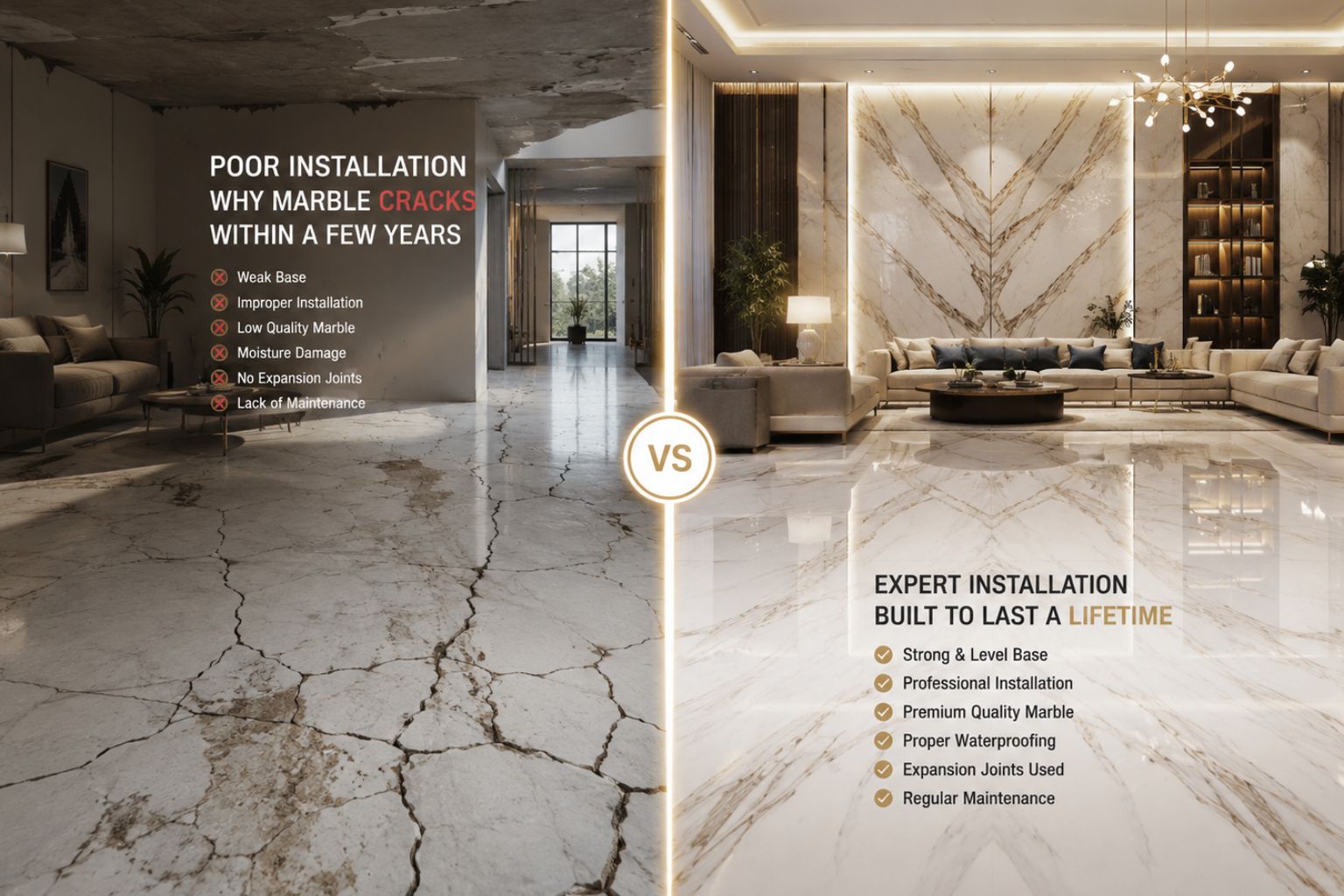
According to stone expert Ankit Singhal, author of THE SECRETS OF MARBLE INDUSTRY, marble cracks are rarely caused by the marble alone. In most cases, the real reasons are poor installation, low-quality material selection, moisture issues, weak base preparation, or lack of technical knowledge during construction.
In this detailed guide, you will learn:
- Why marble cracks within a few years
- Common mistakes builders make
- How to identify weak marble before purchase
- Proper marble installation techniques
- Tips to increase marble life for decades
- Expert advice from Ankit Singhal
If you are planning marble flooring, wall cladding, countertops, or luxury interiors, this guide will help you protect your investment and avoid expensive repairs later.
Understanding Marble Cracks
Marble is a natural stone formed under pressure and heat over millions of years. Every slab has unique veins, textures, mineral compositions, and natural patterns. While marble is durable, it is not indestructible.
Cracks generally happen due to stress, movement, moisture, poor support, or incorrect handling.
There are mainly three types of marble cracks:
1. Hairline Cracks
Thin visible lines that appear on the surface over time.
2. Structural Cracks
Deep cracks caused by pressure, uneven base, or slab weakness.
3. Corner Breakage
Usually occurs due to impact, improper cutting, or unsupported edges.
Understanding the root cause is important before choosing any solution.
Top Reasons Why Marble Cracks Within a Few Years
1. Poor Marble Quality
One of the biggest reasons for early marble damage is purchasing low-grade marble.
Many suppliers sell resin-filled, heavily repaired, or low-density marble at cheap prices. These stones may look attractive initially but become weak after installation.
Low-quality marble often contains:
- Hidden fissures
- Weak natural veins
- Excessive resin treatment
- Internal moisture pockets
- Poor density
After a few years, temperature changes and pressure expose these weaknesses.
Expert Tip from Ankit Singhal
Always inspect slabs under proper lighting. Avoid marble with excessive mesh backing, heavy fillers, or multiple repaired veins.
2. Improper Base Preparation
Marble flooring requires a strong, level, and stable base. If the base is uneven or weak, pressure points develop beneath the slab.
Over time this creates:
- Hollow sounds
- Uneven support
- Pressure stress
- Surface cracks
A weak foundation is one of the most ignored causes of marble failure.
Common Mistakes
- Uneven screed work
- Poor cement ratio
- Incomplete curing
- Air gaps beneath slabs
- Improper leveling
Even premium Italian marble can crack if installed on an unstable base.
3. Incorrect Installation Techniques
Marble installation is a technical process, not just basic masonry work.
Many contractors lack marble-specific expertise. Incorrect installation methods significantly reduce marble lifespan.
Installation Errors That Cause Cracks
- Using low-quality adhesive
- Wrong cement mixture
- Improper joint spacing
- Excessive hammering during laying
- Dry installation methods
- Inadequate expansion gaps
Professional installation is essential for large marble slabs and imported marble.
4. Moisture and Water Damage
Water is one of marble’s biggest enemies.
Excessive moisture beneath marble can weaken bonding materials and create pressure inside the stone structure.
This often leads to:
- Cracks
- Stains
- Surface lifting
- Hollow flooring
- Edge damage
Common Sources of Moisture
- Bathroom leakage
- Poor waterproofing
- Rising dampness
- External wall seepage
- Wet subfloors
Proper waterproofing before marble installation is critical.
5. Heavy Load and Structural Movement
Buildings naturally expand and contract over time.
Heavy furniture, machinery, vehicle movement, or structural shifts place stress on marble surfaces.
Thin marble slabs are especially vulnerable in:
- Commercial spaces
- Hotel lobbies
- Driveways
- High-traffic areas
Without proper support and thickness selection, cracks become unavoidable.
6. Temperature Changes
Extreme heat and cold cause natural expansion and contraction in stone materials.
In areas exposed to direct sunlight or outdoor conditions, thermal movement can lead to cracking.
High-Risk Areas
- Balcony flooring
- Terrace marble
- Outdoor wall cladding
- Sun-facing interiors
Using proper expansion joints helps reduce temperature-related stress.
7. Using Thin Marble Slabs
Many people choose thinner slabs to reduce cost.
However, thin marble lacks structural strength and becomes fragile over time.
Recommended Thickness
- Flooring: 16–20 mm
- Countertops: 18–20 mm
- Staircases: 20 mm or more
- Heavy traffic areas: Thick reinforced slabs
Investing in proper thickness increases durability significantly.
8. Poor Transportation and Handling
Marble can develop invisible stress fractures during transportation.
Improper loading, unloading, stacking, or lifting weakens the slab internally.
These hidden damages often become visible months or years after installation.
Safe Handling Practices
- Use vertical slab transport
- Avoid sudden impacts
- Use protective padding
- Store slabs properly
- Handle edges carefully
Professional suppliers prioritize safe logistics.
9. Lack of Expansion Joints
Expansion joints allow marble to naturally adjust to movement and temperature changes.
Without joints, stress accumulates inside the flooring system.
This eventually causes:
- Surface cracks
- Tile lifting
- Joint failure
Large flooring areas must include proper movement joints.
10. Ignoring Maintenance
Marble requires periodic care.
Using harsh chemicals, acidic cleaners, or improper maintenance methods slowly weakens the surface.
Avoid
- Acid cleaners
- Bleach
- Strong detergents
- Metal scrubbers
Use pH-neutral marble cleaners for long-term durability.
How to Prevent Marble Cracks
Choose High-Quality Marble
Always buy marble from trusted suppliers with transparent quality standards.
Check for:
- Density
- Vein stability
- Water absorption
- Finish quality
- Structural strength
Premium-quality marble lasts for decades when installed correctly.
Hire Experienced Marble Installers
Skilled installation makes a huge difference.
Experienced marble professionals understand:
- Base preparation
- Joint alignment
- Adhesive selection
- Slab balancing
- Expansion management
Never compromise on installation expertise.
Ensure Proper Waterproofing
Waterproofing should be completed before marble laying.
This is especially important for:
- Bathrooms
- Kitchens
- Balconies
- Basements
- Exterior walls
Good waterproofing prevents future moisture damage.
Use Proper Thickness
Do not choose thin marble simply to reduce budget.
Thicker marble provides:
- Better strength
- Longer lifespan
- Improved load-bearing capacity
- Reduced cracking risk
Regular Marble Maintenance
Maintain marble properly to preserve its beauty and strength.
Recommended Maintenance Tips
- Clean spills immediately
- Use soft microfiber cloths
- Avoid acidic substances
- Seal marble periodically
- Use proper floor protection under furniture
Signs Your Marble May Crack Soon
Early warning signs help prevent major damage.
Watch for:
- Hollow sounds
- Small surface lines
- Uneven flooring
- Edge chipping
- Moisture stains
- Loose joints
Immediate professional inspection can save repair costs.
Best Marble Choices for Long-Term Durability
According to stone expert Ankit Singhal, some marble varieties offer better long-term durability when sourced properly.
Recommended Premium Marble Options
- Statuario Marble
- Michelangelo Marble
- Italian Beige Marble
- Imported Grey Marble
- Volakas Marble
- Botticino Marble
- Vietnam White Marble
Quality sourcing and expert installation matter more than just appearance.
Expert Advice from Ankit Singhal
Ankit Singhal, renowned stone expert and author of THE SECRETS OF MARBLE INDUSTRY, emphasizes that marble is a long-term investment.
According to him:
“Most marble failures happen because people focus only on design and price. They ignore installation quality, slab selection, moisture protection, and technical detailing.”
He recommends buyers work only with experienced marble professionals who understand natural stone behavior scientifically and practically.
Why Professional Guidance Matters
Many homeowners spend lakhs on luxury marble interiors but lose money due to poor decisions during selection and installation.
Professional marble consultation helps you:
- Choose durable marble
- Avoid fake imported marble
- Select correct thickness
- Understand maintenance needs
- Prevent costly repairs
The right guidance can increase marble life from 5 years to over 30 years.
Frequently Asked Questions (FAQs)
1. Why does marble crack after installation?
Marble usually cracks due to poor base preparation, moisture, low-quality material, improper installation, or structural movement.
2. Can cracked marble be repaired?
Small cracks can often be repaired using resin or epoxy treatments. Severe structural cracks may require slab replacement.
3. Which marble is least likely to crack?
High-density premium marble with proper installation and correct thickness performs best long-term.
4. Does water damage marble?
Yes. Excessive moisture can weaken marble bonding and lead to stains, lifting, and cracks.
5. How long does quality marble last?
Premium marble can last several decades with proper installation and maintenance.
6. Is Italian marble more fragile?
Some Italian marble varieties are softer and require expert installation and maintenance, but premium-quality slabs perform exceptionally well.
7. How can I check marble quality before buying?
Inspect density, surface consistency, vein stability, water absorption, and slab finishing carefully.
8. Should marble flooring have expansion joints?
Yes. Expansion joints help reduce stress caused by temperature and structural movement.
About the Book – THE SECRETS OF MARBLE INDUSTRY
THE SECRETS OF MARBLE INDUSTRY by Ankit Singhal reveals insider knowledge about marble quality, pricing, installation, sourcing, and industry practices.
This book helps homeowners, architects, builders, and interior designers make smarter marble decisions and avoid costly mistakes.
Contact Us
Stone Expert: Ankit Singhal
Book: THE SECRETS OF MARBLE INDUSTRY
📞 Phone: +91 92521 01111
📧 Email: ceo@shreeramexpo.in
For expert marble guidance, premium marble consultation, and professional support for luxury projects, connect today.
Final Thoughts
Marble cracking is not always a material problem. In most cases, it results from poor installation practices, weak base preparation, moisture exposure, or low-quality sourcing.
By choosing premium marble, experienced installers, proper waterproofing, and expert guidance, you can enjoy beautiful marble interiors for decades without major issues.
As Ankit Singhal explains in THE SECRETS OF MARBLE INDUSTRY, informed decisions are the key to long-lasting luxury.
Invest wisely. Install professionally. Maintain carefully.
That is the real secret behind durable marble.