Complete Guide by Stone Expert Ankit Singhal
Author of THE SECRETS OF MARBLE INDUSTRY
When people select marble, granite, quartzite, or imported natural stone for their homes and commercial projects, they usually focus on color, polish, finish, and design. However, one of the most important factors is often ignored — stone thickness.
The thickness of stone directly affects:
- Durability
- Strength
- Longevity
- Installation quality
- Maintenance
- Overall project cost
Whether you are building a luxury villa, modern apartment, hotel, showroom, office, or commercial property, choosing the correct stone thickness can save you from expensive repairs and replacement costs in the future.
In this detailed guide, stone industry expert Ankit Singhal, author of THE SECRETS OF MARBLE INDUSTRY, explains how stone thickness influences both performance and pricing.
Why Stone Thickness Matters
Natural stone is a premium material. Every slab is unique in texture, density, and structural strength. Thickness determines how much load the stone can handle and how resistant it will be against:
- Cracks
- Breakage
- Chipping
- Moisture damage
- Heavy foot traffic
- Furniture weight
- Temperature changes
A wrong thickness selection may lead to:
- Frequent repairs
- Uneven flooring
- Broken edges
- Hollow sounds after installation
- Weak countertops
- Poor finishing quality
That is why experienced architects, builders, and interior designers always pay close attention to slab thickness before finalizing any project.
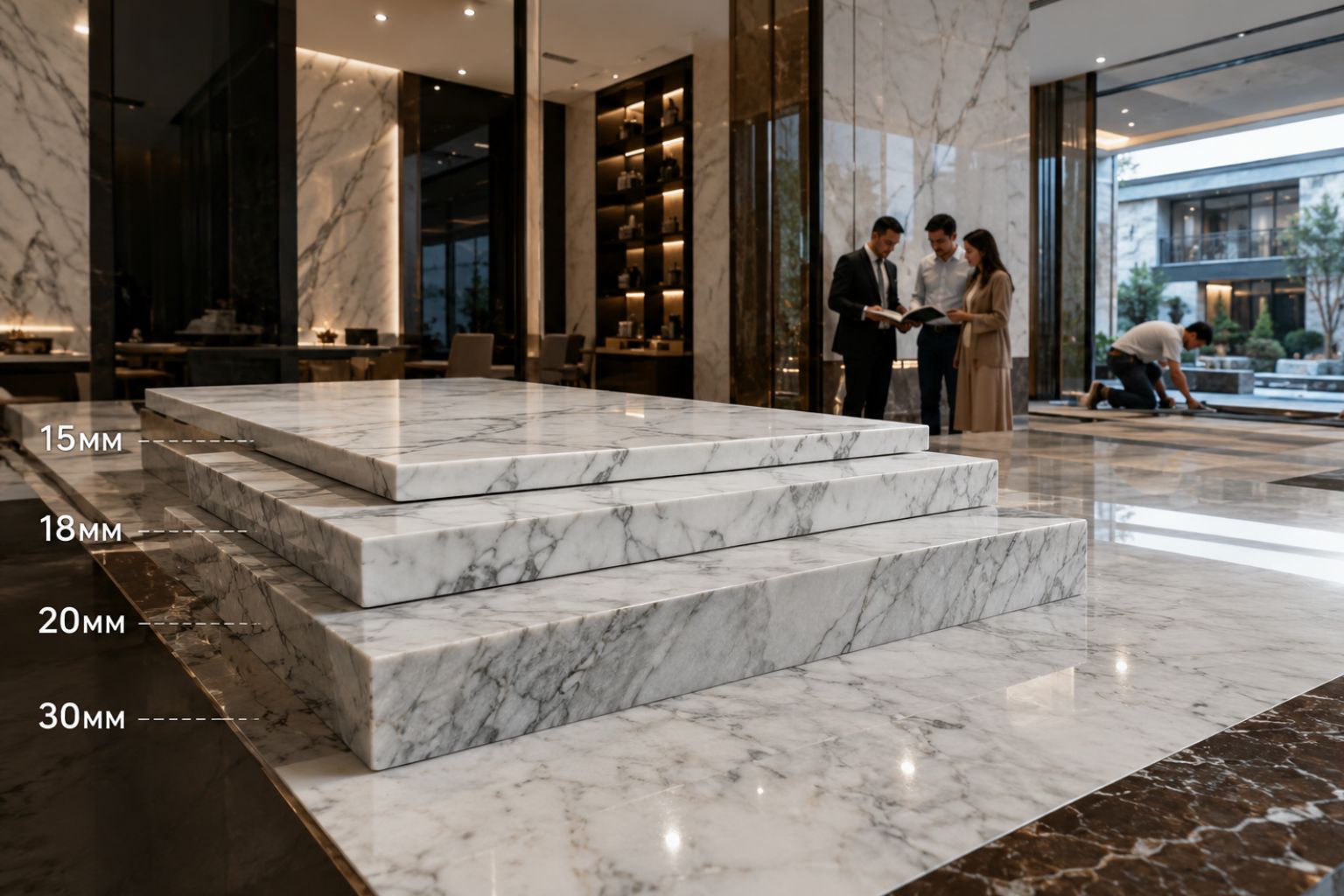
Common Stone Thickness Options
Different stones are available in various thicknesses depending on application and usage.
1. 16mm Thickness Stone
16mm is generally used for:
- Wall cladding
- Vertical applications
- Decorative panels
- Light-use areas
Advantages
- Lower cost
- Lightweight
- Easier transportation
- Suitable for wall elevations
Disadvantages
- Less durable for flooring
- Higher chance of cracking
- Not ideal for heavy traffic areas
This thickness is mainly preferred when aesthetics are more important than structural strength.
2. 18mm Thickness Stone
18mm is one of the most commonly used thicknesses in residential projects.
Best For
- Home flooring
- Bedrooms
- Living rooms
- Moderate-use areas
Benefits
- Balanced durability and price
- Good strength for residential use
- Easy installation
- Widely available
Many imported marble varieties come in 18mm thickness because it offers an excellent balance between luxury appearance and practical usability.
3. 20mm Thickness Stone
20mm thickness is considered premium and highly durable.
Ideal For
- Luxury homes
- Hotels
- Commercial flooring
- Kitchen countertops
- Staircases
Benefits
- Better load-bearing capacity
- Stronger edges
- Longer lifespan
- Reduced breakage risk
Though slightly more expensive, 20mm stone provides significantly better performance in high-traffic areas.
4. 30mm Thickness Stone
30mm stone is ultra-strong and mostly used in high-end luxury applications.
Common Uses
- Kitchen islands
- Premium countertops
- Heavy-duty commercial projects
- Exterior applications
- Designer furniture tops
Advantages
- Exceptional durability
- Luxurious appearance
- Better edge profiling
- Superior structural stability
However, transportation and installation costs increase because thicker slabs are heavier.
How Thickness Affects Stone Durability
1. Resistance to Cracks
Thicker stone slabs are naturally stronger. They distribute pressure more evenly and reduce the chances of cracking under heavy loads.
For example:
- Thin marble flooring may crack under heavy furniture.
- Thick granite slabs handle weight more efficiently.
In high-traffic commercial spaces, thicker stone is always recommended.
2. Better Impact Resistance
Stone surfaces experience daily impacts from:
- Foot traffic
- Dropped objects
- Furniture movement
- Appliances
Thicker slabs absorb shocks better than thinner slabs.
This is especially important in:
- Kitchens
- Hotel lobbies
- Shopping malls
- Office spaces
3. Improved Longevity
A thicker slab generally lasts longer because it can withstand years of usage without structural damage.
Premium projects often use thicker natural stone because long-term durability matters more than short-term savings.
4. Stronger Edges
Thin stone edges are vulnerable to:
- Chipping
- Corner damage
- Breakage during installation
Thicker stone provides stronger and safer edges, especially for countertops and staircases.
How Thickness Affects Stone Cost
Many buyers assume that stone pricing depends only on material quality. In reality, thickness significantly changes the final project budget.
1. Material Cost Increases
Thicker slabs require more raw material.
For example:
- 20mm marble costs more than 15mm marble.
- 30mm granite costs more than 20mm granite.
The increase is due to additional quarry extraction and processing costs.
2. Transportation Cost Rises
Heavier slabs increase:
- Loading costs
- Freight expenses
- Handling charges
Imported marble transportation becomes more expensive with increased thickness.
3. Installation Charges Become Higher
Thicker stone needs:
- Skilled labor
- Stronger adhesive
- Better leveling
- Advanced cutting equipment
This increases installation expenses.
4. Wastage & Cutting Costs
Thicker slabs are harder to cut and shape. Complex designs, edge finishing, and custom fabrication require more time and precision.
As a result:
- Fabrication costs rise
- Cutting wastage increases
- Project timelines become longer
Choosing the Right Thickness for Different Applications
Flooring
Recommended Thickness:
18mm to 20mm
Flooring requires durability and stability. Thin flooring may crack over time, especially in large spaces.
Kitchen Countertops
Recommended Thickness:
18mm to 20mm
Kitchen counters face:
- Heat
- Water exposure
- Heavy appliances
- Daily impact
Thicker stone ensures better performance and longer life.
Wall Cladding
Recommended Thickness:
16mm to 18mm
Wall applications do not carry heavy loads, so thinner stone works well while reducing structural weight.
Staircases
Recommended Thickness:
20mm
Stairs experience constant pressure and edge impact. Stronger thickness improves safety and durability.
Commercial Spaces
Recommended Thickness:
20mm or above
Commercial projects require maximum durability because of continuous foot traffic.
Does Thicker Stone Always Mean Better Quality?
Not necessarily.
Thickness improves strength, but stone quality also depends on:
- Density
- Porosity
- Mineral composition
- Finishing quality
- Processing standards
A premium-quality 18mm marble can outperform a low-quality 20mm marble.
That is why sourcing from trusted suppliers is extremely important.
Expert Advice from Ankit Singhal
According to stone expert Ankit Singhal, one of the biggest mistakes buyers make is choosing thinner stone only to reduce upfront costs.
Many projects later face issues like:
- Cracks
- Hollow flooring
- Edge damage
- Water seepage
- Replacement expenses
His recommendation is simple:
“Always choose stone thickness according to application, usage, and long-term durability — not just initial price.”
As explained in his book THE SECRETS OF MARBLE INDUSTRY, smart stone selection can save lakhs of rupees in future maintenance costs.
Tips Before Buying Stone
1. Ask About Actual Thickness
Some suppliers may provide less thickness than promised. Always verify with proper measurement tools.
2. Check Slab Uniformity
Uneven thickness can create installation problems and weak spots.
3. Match Thickness with Application
Do not use lightweight slabs in heavy-use areas.
4. Choose Experienced Suppliers
Professional suppliers guide you properly based on project requirements.
5. Think Long-Term
Saving a small amount initially may lead to huge repair costs later.
Future Trends in Stone Thickness
Modern architecture is evolving rapidly. Today, ultra-thin stone panels are becoming popular for lightweight decorative applications, while thicker slabs remain the preferred choice for premium luxury spaces.
Advanced stone processing technologies now allow:
- Large-format slabs
- Bookmatched marble designs
- Precision thickness cutting
- Stronger engineered support systems
However, durability will always remain one of the most critical factors in natural stone selection.
Why Professional Guidance Matters
Natural stone is a long-term investment. The right guidance helps buyers avoid costly mistakes.
Experienced industry professionals understand:
- Stone behavior
- Structural requirements
- Installation methods
- Long-term maintenance
This is why architects, builders, and homeowners increasingly consult stone experts before finalizing materials.
Frequently Asked Questions (FAQs)
Q1. Which stone thickness is best for flooring?
18mm to 20mm thickness is generally recommended for durable flooring applications.
Q2. Is thicker marble more expensive?
Yes. Thicker marble costs more because it requires additional raw material, transportation, and fabrication.
Q3. Can thin marble crack easily?
Yes. Thin marble is more vulnerable to cracking under heavy pressure or improper installation.
Q4. Which thickness is best for kitchen countertops?
18mm to 20mm stone thickness is ideal for countertops due to higher durability and strength.
Q5. Does thickness affect stone lifespan?
Absolutely. Thicker stone usually lasts longer and handles wear more effectively.
Q6. Is 16mm marble suitable for flooring?
It may work in low-traffic residential spaces, but thicker slabs are generally safer and more durable.
Q7. Why do luxury projects use thicker stone?
Luxury projects prioritize long-term durability, premium finishing, and structural stability.
About the Author
Ankit Singhal is a respected stone industry expert and the author of THE SECRETS OF MARBLE INDUSTRY. He has extensive experience in natural stone, imported marble, granite, luxury interiors, and premium architectural surfaces.
His expert insights help homeowners, architects, builders, and designers make smarter stone-buying decisions.
Contact Us
Stone Expert Guidance & Premium Marble Consultation
📞 Phone: +91 92521 01111
📧 Email: ceo@shreeramexpo.in
Book:
THE SECRETS OF MARBLE INDUSTRY
Get professional guidance for:
- Imported Marble
- Italian Marble
- Granite Selection
- Luxury Stone Projects
- Thickness Consultation
- Premium Interior Applications
Choose wisely. Build beautifully. Invest in long-term durability with expert stone knowledge.