
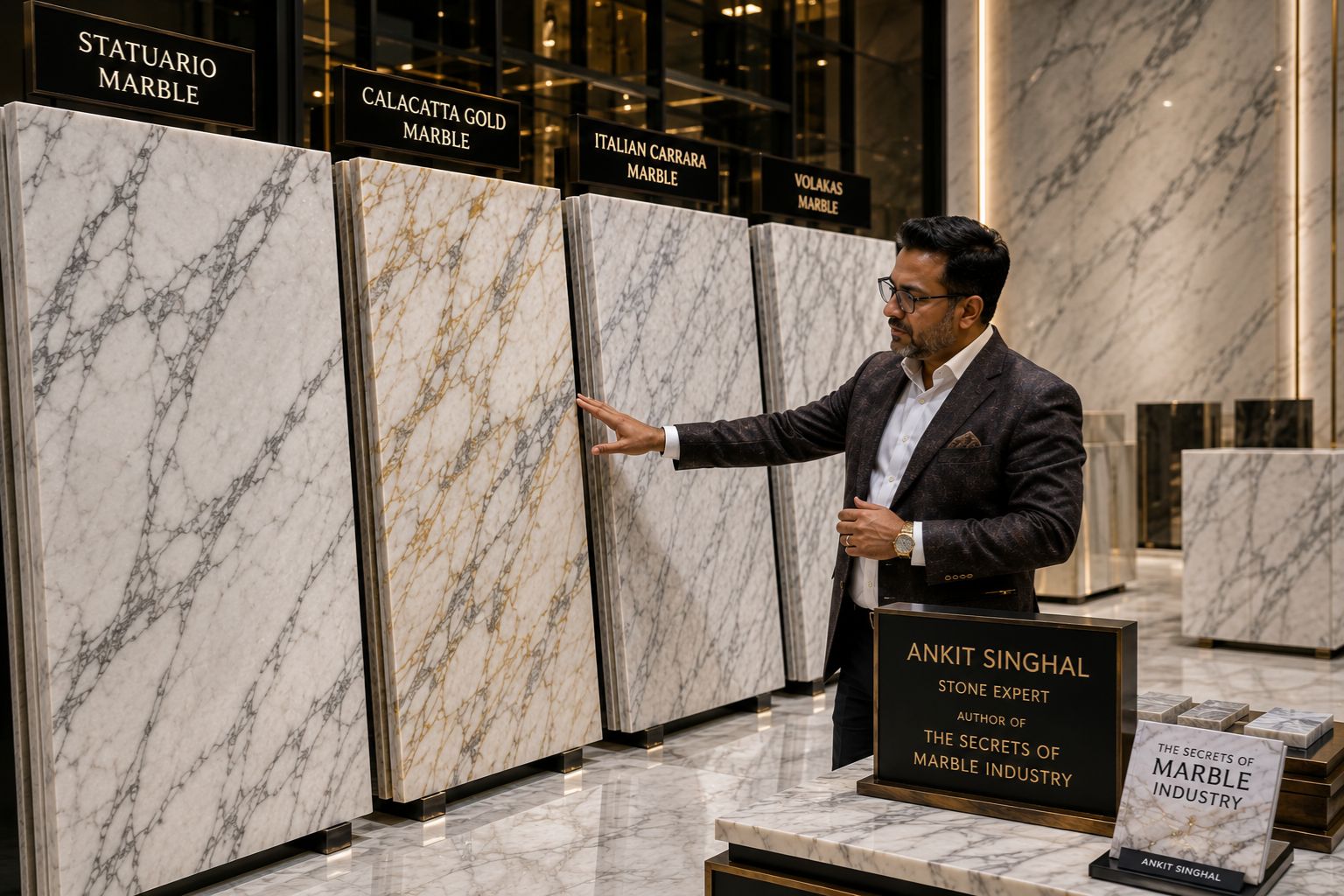
Marble is more than just a stone. It is a symbol of luxury, elegance, and timeless beauty. Whether you are designing a luxury villa, modern apartment, hotel lobby, office, or commercial project, choosing the right marble slab can completely transform the space.
But here’s the reality most buyers face:
Two marble slabs may look similar in photos, yet their quality, strength, finish, and long-term durability can be completely different.
This is why understanding how to compare marble slabs like an expert is extremely important before making a purchase.
In this detailed guide, stone expert Ankit Singhal, author of THE SECRETS OF MARBLE INDUSTRY, explains the professional methods used by experienced marble buyers, architects, interior designers, and stone experts to compare marble slabs properly.
Why Marble Slab Comparison Matters
Many homeowners focus only on color and price. But professional marble selection involves much more:
- Surface quality
- Vein consistency
- Thickness accuracy
- Polish quality
- Crack visibility
- Water absorption
- Durability
- Pattern matching
- Origin and grading
A wrong marble selection can lead to:
- Uneven flooring
- Shade variation
- Cracking issues
- Poor polish after installation
- High maintenance costs
- Reduced property value
Expert comparison helps you avoid these costly mistakes.
1. Check the Marble Surface Carefully
The first step experts follow is surface inspection.
A high-quality marble slab should have:
- Smooth texture
- Uniform polish
- Clean finish
- Minimal visible pores
- Balanced veining
Look closely under proper lighting.
Professional buyers always inspect slabs in natural daylight because artificial showroom lights can hide defects.
Things to Avoid
- Open cracks
- Dull polish patches
- Filled holes
- Surface waves
- Resin-heavy finishing
Premium marble should feel luxurious even before installation.
2. Compare Veining Patterns
Veining is the soul of marble.
Natural marble develops unique veins over thousands of years. No two slabs are exactly identical.
Experts compare:
- Vein flow
- Vein depth
- Vein color
- Pattern balance
- Bookmatching possibilities
For luxury interiors, consistent veining creates a seamless premium appearance.
Popular Vein Types
- Bold dramatic veins
- Soft cloudy veins
- Linear veins
- Golden artistic veins
- Feather-style veins
Bookmatched marble slabs are especially popular in luxury villas, hotel lobbies, and designer wall applications.
3. Observe Color Consistency
Marble is a natural stone, so slight variation is normal. However, excessive shade difference can ruin the final look.
Experts place slabs side-by-side to compare:
- Background color
- Vein contrast
- Tone consistency
- Reflection quality
For large flooring projects, matching shade lots are extremely important.
Pro Tip from Ankit Singhal
Always select complete slab lots together instead of buying random slabs later. Different batches may have visible color variation.
4. Check Slab Thickness Accuracy
Thickness matters more than most buyers realize.
Uneven slab thickness can create major installation issues.
Professional fabricators measure slabs carefully using precision tools.
Standard Marble Thickness
- 16 mm
- 18 mm
- 20 mm
Uneven thickness may cause:
- Improper leveling
- Edge alignment problems
- Weak spots
- Extra installation cost
Premium marble suppliers maintain consistent thickness throughout the slab.
5. Test the Marble Polish Quality
High-quality polish enhances marble beauty and durability.
Experts inspect marble polish from different angles under light.
A superior polish should:
- Reflect clearly
- Feel smooth
- Have mirror-like shine
- Show deep color richness
Low-quality polishing fades quickly after installation.
Quick Expert Test
Stand at an angle and check light reflection on the slab surface. Premium marble reflects evenly without blurry patches.
6. Identify Natural Cracks vs Structural Cracks
This is one of the biggest differences between beginners and experts.
Natural marble may contain:
- Hairline veins
- Mineral lines
- Natural textures
But structural cracks are dangerous.
Structural Crack Warning Signs
- Deep visible openings
- Uneven resin filling
- Broken vein continuation
- Weak sound while tapping
Experts gently tap slabs to identify hollow or weak areas.
Strong marble produces a solid sound.
7. Understand Marble Grading
Not all marble is premium quality.
Marble is often categorized into different grades based on:
- Purity
- Vein beauty
- Crack percentage
- Color consistency
- Surface finish
Common Marble Grades
- Premium Grade
- Commercial Grade
- Economy Grade
Premium-grade marble usually offers:
- Better durability
- Rich appearance
- Fewer defects
- Superior polish retention
Luxury projects always prefer premium selection.
8. Compare Water Absorption Capacity
Professional marble buyers always evaluate porosity.
Highly porous marble absorbs:
- Water
- Oil
- Dust
- Chemicals
This leads to:
- Stains
- Yellowing
- Surface damage
Dense marble performs better in kitchens, bathrooms, and high-traffic areas.
Simple Water Test
Place a few drops of water on the surface.
If water absorbs quickly, the marble may require stronger sealing and maintenance.
9. Evaluate the Marble Finish
Different finishes create completely different visual effects.
Popular Marble Finishes
Polished Finish
- High shine
- Luxury appearance
- Most popular for interiors
Honed Finish
- Matte appearance
- Soft elegant texture
- Modern minimal design
Leather Finish
- Textured surface
- Designer look
- Better grip
Experts choose finishes according to project style and functionality.
10. Compare Marble Under Natural Light
Many buyers select marble inside showrooms only.
This is a major mistake.
Natural sunlight reveals:
- Actual color tone
- Vein details
- Surface imperfections
- Polish clarity
Professional designers always inspect slabs outdoors before final approval.
11. Check the Back Side of the Slab
Experts never ignore the back side.
The back surface reveals:
- Reinforcement quality
- Mesh backing
- Resin usage
- Structural strength
Too much resin can indicate weaker stone quality.
High-quality marble usually requires minimal artificial filling.
12. Understand Imported vs Indian Marble
Both imported and Indian marble have unique strengths.
Imported Marble
- Exotic patterns
- Luxury appeal
- International aesthetics
Indian Marble
- Excellent durability
- Better affordability
- Lower maintenance
Experts compare projects, budget, and application before finalizing.
13. Ask About Cutting Direction
Cutting direction changes marble appearance dramatically.
Cross Cut
- Cloudy patterns
- Artistic movement
Vein Cut
- Linear elegant veins
- Modern luxury appearance
Professional interior designers choose cut styles according to design themes.
14. Match Marble With Interior Style
Experts never choose marble separately from interior design.
Modern Interiors
- White marble
- Grey veins
- Minimal patterns
Classic Luxury Interiors
- Golden veins
- Rich textures
- Dramatic movement
Commercial Spaces
- Durable dense marble
- Easy maintenance surfaces
Perfect marble selection creates harmony throughout the space.
15. Compare Price vs Long-Term Value
Cheap marble can become expensive later.
Low-quality slabs often create:
- Repair costs
- Replacement expenses
- Maintenance issues
- Installation problems
Premium marble offers:
- Better lifespan
- Luxury appearance
- Higher property value
- Long-term satisfaction
Stone experts always focus on value instead of only price.
Expert Advice from Ankit Singhal
According to stone expert Ankit Singhal:
“The best marble is not the most expensive one. The best marble is the one that perfectly matches your project requirements, aesthetics, durability expectations, and long-term performance.”
Careful slab comparison saves money, improves project quality, and creates timeless interiors.
Why Professional Marble Guidance Matters
The marble industry is vast and often confusing for first-time buyers.
Professional guidance helps you:
- Avoid low-grade materials
- Select matching slabs
- Understand quality differences
- Save unnecessary costs
- Choose long-lasting stone
This is why architects, builders, and homeowners increasingly rely on experienced marble consultants.
About the Book
THE SECRETS OF MARBLE INDUSTRY
THE SECRETS OF MARBLE INDUSTRY by Ankit Singhal reveals professional insights about:
- Marble selection
- Industry secrets
- Pricing strategies
- Quality identification
- Marble sourcing
- Interior stone trends
- Buying mistakes to avoid
The book is designed for:
- Homeowners
- Architects
- Interior designers
- Builders
- Real estate developers
- Marble business professionals
It simplifies the complex marble industry into practical expert knowledge.
5-Star Customer Reviews
★★★★★
“Ankit Singhal explains marble selection in a very practical and easy way. After reading this guide, we confidently selected premium slabs for our villa project.”
★★★★★
“The most useful marble buying information I have ever read. Very detailed, professional, and beginner-friendly.”
★★★★★
“We avoided a major marble purchasing mistake after learning how to compare slab quality properly. Highly informative content.”
★★★★★
“The explanation about veins, polish, thickness, and grading helped us understand real marble quality differences.”
★★★★★
“Excellent guidance for homeowners and architects. The tips are practical and easy to apply during slab selection.”
Frequently Asked Questions (FAQs)
How can I identify premium-quality marble slabs?
Check surface polish, vein consistency, thickness accuracy, crack visibility, and overall finishing quality.
Why do marble slab prices vary so much?
Prices depend on origin, rarity, grading, pattern quality, slab size, thickness, and finish.
Is imported marble always better than Indian marble?
Not necessarily. Imported marble offers unique aesthetics, while Indian marble often provides excellent durability and value.
How important is marble polishing?
Polishing affects beauty, reflection, stain resistance, and long-term appearance.
Can marble slabs contain natural lines?
Yes. Natural veins and mineral lines are common in genuine marble. Structural cracks are different and should be avoided.
Why should marble be checked in sunlight?
Natural light reveals actual color tone, polish quality, and hidden imperfections more accurately.
What is bookmatched marble?
Bookmatching aligns adjacent slabs to create symmetrical mirror-like vein patterns.
Which marble finish is best for flooring?
Polished marble is most popular for luxury interiors, while honed finishes suit modern minimal spaces.
Contact Us
Stone Expert Guidance & Marble Consultation
Phone: +91 92521 01111
Email: ceo@shreeramexpo.in
Final Thoughts
Choosing marble is not just about selecting a beautiful slab. It is about understanding quality, structure, durability, design harmony, and long-term value.
When you compare marble slabs like an expert, you make smarter decisions that improve both aesthetics and investment value.
With proper guidance from experienced professionals like Ankit Singhal, buyers can confidently select marble that delivers luxury, performance, and timeless elegance for generations.