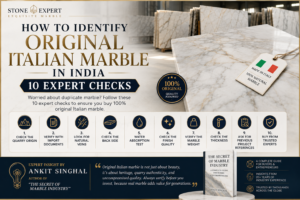

Imported marble has become a symbol of luxury in modern Indian homes, hotels, villas, offices, and commercial projects. From elegant white Italian marble to premium beige and grey stones, buyers across India invest lakhs of rupees to create timeless interiors. However, with rising demand comes a major problem — fake imported marble in the Indian market.
Many customers unknowingly pay premium prices for low-quality or duplicate marble. Some traders sell Indian marble with imported names, while others polish poor-grade material and market it as luxury Italian stone. This creates confusion for homeowners, builders, architects, and interior designers.
To help buyers make smarter decisions, stone expert Ankit Singhal, author of the famous book “THE SECRETS OF MARBLE INDUSTRY”, shares this complete guide on how to identify genuine imported marble and avoid fraud in India.
Whether you are building a luxury home, renovating a hotel, or selecting marble for commercial spaces, this guide will help you protect your investment.
Why Fake Imported Marble Is Increasing in India
The Indian marble market is massive. Premium imported marble varieties such as Statuario, Carrara, Michelangelo, Botticino, Dyna, Volakas, and Thassos are highly demanded for luxury interiors.
Unfortunately, many sellers exploit this demand by:
- Selling low-grade marble as premium imported stone
- Using chemical coatings to create fake shine
- Mixing local marble with imported lots
- Offering machine-filled cracks and hidden repairs
- Providing incorrect country-of-origin information
- Charging imported marble prices for duplicate material
Most customers cannot easily identify the difference between genuine and fake imported marble. That is why expert guidance is important before making a purchase.
Who Is Ankit Singhal?
Ankit Singhal is a well-known stone industry expert with deep knowledge of imported marble, granite, natural stone sourcing, quality inspection, and marble processing.
He is also the author of the highly informative book:
THE SECRETS OF MARBLE INDUSTRY
The book reveals hidden truths about marble pricing, quality differences, marble polishing, fake imports, sourcing tricks, and industry practices that every buyer should know before investing in natural stone.
His guidance has helped thousands of homeowners, architects, builders, and interior designers select authentic marble with confidence.
1. Always Check the Marble Origin
One of the biggest mistakes buyers make is trusting verbal claims.
If a seller says the marble is imported from Italy, Greece, Turkey, or Spain, ask for proof.
Important documents to verify:
- Import invoice
- Container details
- Country-of-origin certificate
- GST bill mentioning imported marble
- Lot number and batch details
Genuine suppliers maintain proper documentation. Fake dealers often avoid showing paperwork.
For example:
- Genuine Statuario Marble comes from Italy
- Volakas Marble is originally from Greece
- Botticino Marble comes from Italy
- Dyna Marble is sourced from Turkey
Knowing the actual origin helps avoid duplicate products.
2. Understand Natural Veins and Patterns
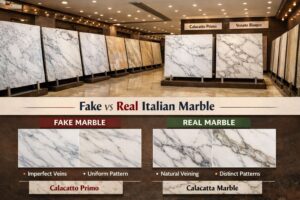
Real imported marble has natural beauty and unique vein movement. Fake or low-grade marble often shows:
- Repeated patterns
- Artificial color enhancement
- Uneven polishing
- Printed or chemically enhanced surfaces
Premium imported marble usually has:
- Natural depth
- Elegant vein flow
- Rich texture
- Balanced shade variation
Before buying, inspect multiple slabs under proper lighting.
Never finalize marble based only on photos or WhatsApp videos.
3. Beware of Extremely Cheap Prices
Luxury imported marble is expensive because of:
- International sourcing
- Shipping costs
- Import duty
- Processing and polishing
- Limited availability
If someone offers “Italian marble” at unbelievably cheap prices, be careful.
Low prices often indicate:
- Duplicate material
- Low-grade stock
- Repaired slabs
- Factory rejects
- Local marble sold under imported names
Quality imported marble is an investment. Focus on authenticity rather than unrealistic discounts.
4. Check Slab Thickness Carefully
Many fake suppliers reduce slab thickness to lower costs.
Standard imported marble thickness is usually:
- 18 mm
- 20 mm
Thin slabs may:
- Crack easily
- Lose durability
- Reduce polishing life
- Create installation issues
Always measure slab thickness physically before purchase.
5. Inspect for Excessive Filling and Repairs
Natural marble can contain minor pores or hairline cracks. However, fake or poor-quality marble often has:
- Heavy resin filling
- Mesh backing
- Artificial patchwork
- Excessive repairs
Turn the slab upside down and inspect the back side carefully.
Too much filling means the marble may not perform well long-term.
6. Visit a Trusted Marble Supplier
Buying marble online without inspection can be risky.
Visit a reputed marble showroom or warehouse where you can:
- Compare slabs physically
- Verify consistency
- Check polishing quality
- Understand grade differences
- Inspect multiple lots
Experienced suppliers educate customers instead of pushing quick sales.
7. Understand Marble Grades
Imported marble comes in different quality grades.
Top-grade marble usually offers:
- Better whiteness
- Cleaner background
- Fewer cracks
- Superior polishing
- Better vein consistency
Lower grades may look attractive initially but create problems later.
Always ask:
- Which grade is this?
- Is this premium selection?
- Is this commercial grade?
- Is this factory reject stock?
8. Verify Polishing Quality
High-quality imported marble reflects light naturally and maintains shine for years.
Fake polishing techniques may create temporary gloss using chemicals or wax coatings.
Signs of poor polishing:
- Uneven reflection
- Surface dullness after cleaning
- Circular machine marks
- Artificial slippery finish
A professional inspection helps identify real factory polishing.
9. Avoid Buying Only by Name
Many customers buy marble only because of famous names like:
- Statuario
- Carrara
- Michelangelo
- Volakas
- Botticino
But marble quality depends on:
- Quarry source
- Selection grade
- Processing quality
- Slab thickness
- Finish consistency
Two slabs with the same marble name can have huge quality differences.
Always inspect actual slabs rather than relying only on branding.
10. Take Expert Guidance Before Finalizing
Marble is a long-term investment. Wrong selection can lead to:
- Cracks
- Stains
- Shade variation
- Poor durability
- Expensive replacement costs
Consulting a stone expert can save lakhs of rupees and prevent costly mistakes.
Ankit Singhal’s practical industry knowledge helps buyers understand:
- Real vs fake marble
- Correct pricing
- Quality inspection
- Marble maintenance
- Supplier verification
Why Genuine Imported Marble Is Worth the Investment
Authentic imported marble provides:
- Luxury appearance
- Long-lasting beauty
- Timeless elegance
- Better durability
- Higher property value
- Premium interior finish
Whether used in flooring, wall cladding, staircases, countertops, bathrooms, or hotel lobbies, genuine marble creates unmatched sophistication.
Common Myths About Imported Marble
Myth 1: Expensive Marble Means Original Marble
Not always. Some sellers overcharge for duplicate material.
Myth 2: All White Marble Is Italian
False. Many Indian and Asian stones resemble Italian marble.
Myth 3: More Shine Means Better Quality
Artificial coatings can create temporary shine.
Myth 4: Imported Marble Never Has Cracks
Natural marble may contain veins and minor fissures.
Myth 5: Online Photos Show Real Quality
Lighting and editing can completely change appearance.
Tips for Architects and Builders
Architects and builders should:
- Source directly from trusted suppliers
- Inspect lots personally
- Match slabs before installation
- Verify polishing quality
- Maintain batch consistency
- Avoid last-minute purchasing
Professional planning ensures better project execution.
Marble Maintenance Tips
Even premium marble needs proper care.
Maintenance guidelines:
- Use pH-neutral cleaners
- Avoid acidic chemicals
- Clean spills quickly
- Use proper sealing when required
- Avoid dragging heavy furniture
- Polish periodically for long-term shine
Correct maintenance preserves marble beauty for decades.
5-Star Customer Reviews
⭐⭐⭐⭐⭐ Rajesh Mehta – Mumbai
“Ankit Singhal’s guidance helped us avoid fake Italian marble during our villa project. The knowledge shared in THE SECRETS OF MARBLE INDUSTRY is extremely valuable for every homeowner.”
⭐⭐⭐⭐⭐ Priya Sharma – Delhi
“We almost purchased duplicate imported marble before consulting experts. This guide saved us from a huge financial mistake. Highly recommended for anyone building luxury interiors.”
⭐⭐⭐⭐⭐ Aman Verma – Jaipur
“The marble inspection tips were practical and easy to understand. Genuine industry knowledge explained in simple language.”
⭐⭐⭐⭐⭐ Neha Kapoor – Ahmedabad
“Excellent information about marble grades and polishing quality. We selected original imported marble confidently after reading this guide.”
⭐⭐⭐⭐⭐ Rohit Jain – Hyderabad
“THE SECRETS OF MARBLE INDUSTRY opened our eyes to how the marble market actually works. Very informative and helpful.”
Frequently Asked Questions (FAQs)
Q1. How can I identify genuine imported marble?
Check import documents, slab consistency, polishing quality, natural veins, and supplier reputation before purchasing.
Q2. Is all Italian marble expensive?
Premium Italian marble is generally costly due to import and processing expenses, but prices vary by grade and selection.
Q3. Can fake marble look similar to original marble?
Yes. Many duplicate stones resemble genuine imported marble visually, making expert inspection important.
Q4. Which imported marble is best for luxury homes?
Popular choices include Statuario, Carrara, Michelangelo, Volakas, Botticino, and Thassos marble.
Q5. Why do marble prices vary so much?
Prices depend on quarry source, grade, thickness, rarity, polishing quality, and slab selection.
Q6. Is imported marble durable?
Yes. Genuine imported marble offers excellent durability when properly installed and maintained.
Q7. What should I avoid while buying marble?
Avoid purchasing only based on photos, cheap pricing, or verbal promises without verification.
Q8. Can repaired marble create future problems?
Excessively repaired or heavily filled slabs may crack or lose durability over time.
Final Thoughts
Imported marble adds timeless luxury and elegance to interiors, but buyers must stay aware of fake products in the market. Proper inspection, supplier verification, and expert guidance can protect your investment and ensure you receive genuine quality.
Stone expert Ankit Singhal, author of THE SECRETS OF MARBLE INDUSTRY, continues helping customers make smarter marble decisions with transparent industry knowledge and practical buying advice.
If you are planning to purchase imported marble for your home, villa, hotel, office, or commercial project, always prioritize authenticity, quality, and trusted expertise.
Contact Us
📞 Call: +91 92521 01111
📧 Email: ceo@shreeramexpo.in