
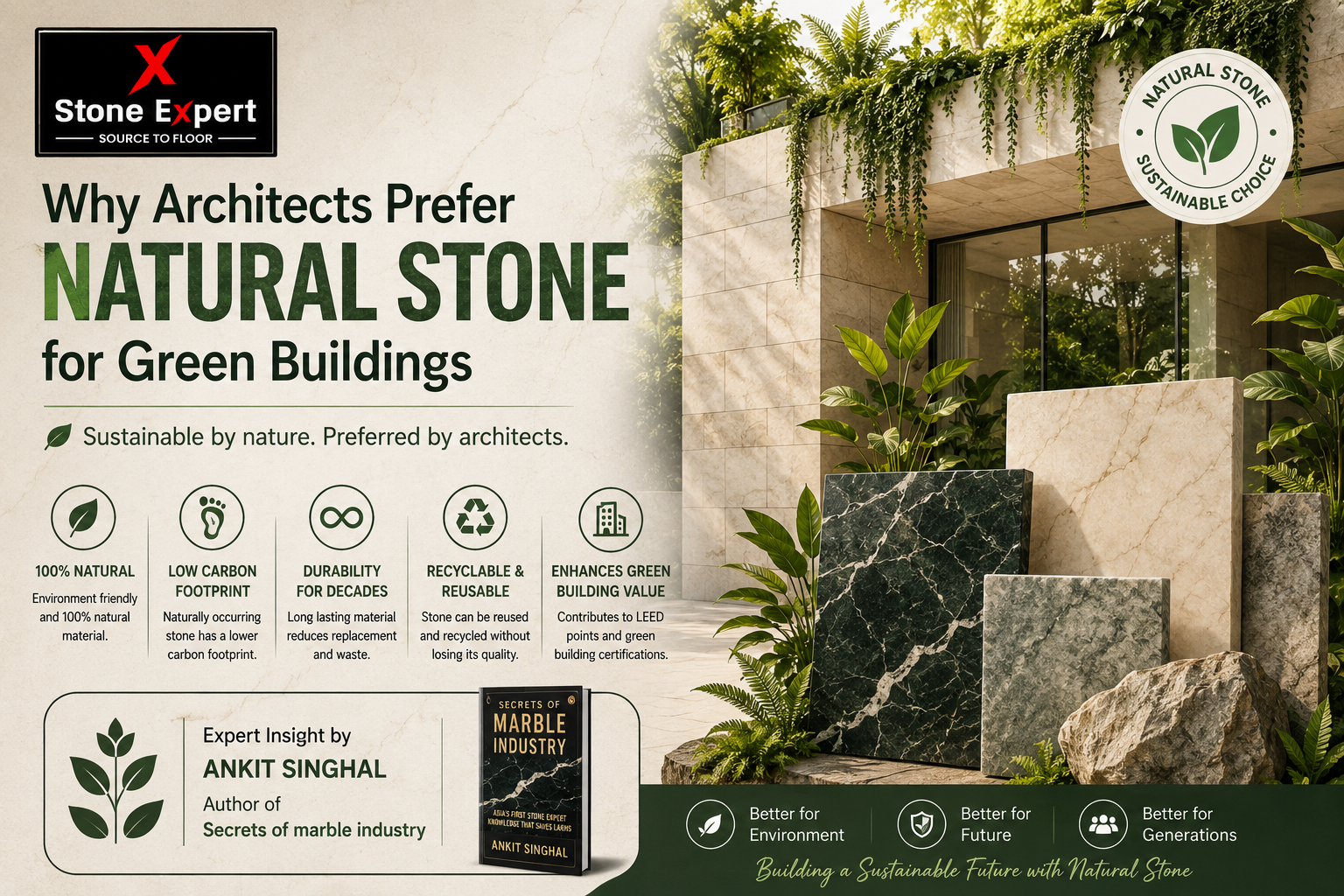
Green architecture continues to shape the future of modern construction. Today, architects focus on materials that reduce environmental impact while delivering long-term value. As a result, natural stone has become one of the most trusted choices for sustainable projects.
Natural stone combines beauty, strength, and environmental responsibility. Moreover, it requires minimal processing compared to many manufactured materials. Therefore, architects frequently specify natural stone for residential, commercial, and institutional green buildings.
What Makes Natural Stone a Sustainable Building Material?
Natural stone is extracted directly from the earth with limited industrial processing. Consequently, it consumes less energy during production than many synthetic alternatives.
Furthermore, stone offers an exceptionally long lifespan. Instead of frequent replacement, buildings constructed with natural stone can last for generations. This durability significantly reduces construction waste over time.
Key sustainability advantages include:
- Low embodied energy
- Minimal chemical processing
- Long service life
- Recyclable and reusable material
- Reduced maintenance requirements
These qualities make natural stone an essential component of environmentally responsible construction.
Natural Stone Improves Energy Efficiency
Energy efficiency remains a primary goal in green building design. Fortunately, natural stone naturally regulates indoor temperatures.
Its high thermal mass absorbs heat during the day and gradually releases it when temperatures fall. As a result, buildings stay cooler during hot afternoons and warmer during colder nights.
Consequently, property owners experience:
- Lower heating costs
- Reduced cooling expenses
- Improved indoor comfort
- Better energy performance
Therefore, architects often select natural stone for exterior walls, flooring, and facades.
Exceptional Durability Reduces Environmental Impact
Durability directly supports sustainability. Unlike many artificial materials, natural stone withstands harsh weather, heavy traffic, moisture, and UV exposure.
Moreover, it maintains its appearance for decades without extensive repairs. Because replacement occurs less frequently, fewer raw materials enter the construction cycle.
This long lifespan reduces:
- Material consumption
- Transportation emissions
- Construction waste
- Maintenance expenses
Hence, natural stone remains a cost-effective and environmentally friendly investment.
Natural Stone Enhances Indoor Air Quality
Healthy indoor environments are equally important in green buildings. Fortunately, natural stone contains very few volatile organic compounds (VOCs).
Unlike certain manufactured products, stone does not release harmful chemicals into indoor spaces. Therefore, architects choose it for homes, hospitals, offices, hotels, and educational institutions.
Additionally, stone surfaces resist mold growth when installed correctly. Consequently, occupants enjoy healthier living and working environments.
Natural Stone Supports Green Building Certifications
Many sustainable construction projects pursue internationally recognized certifications.
Natural stone can contribute toward green building standards because it offers:
- Durable performance
- Recyclable material properties
- Regional sourcing opportunities
- Low environmental impact
- Long product lifecycle
Therefore, architects often specify natural stone in projects targeting environmentally responsible construction goals.
Wide Design Flexibility for Modern Architecture
Sustainability should never compromise aesthetics. Fortunately, natural stone offers remarkable design versatility.
Architects can choose from numerous options, including:
- Marble
- Granite
- Sandstone
- Limestone
- Quartzite
- Slate
Each variety provides unique colors, textures, and finishes. Consequently, designers can create contemporary, classic, or luxury architectural styles while maintaining environmental responsibility.
Furthermore, stone complements glass, steel, wood, and concrete, making it suitable for almost every architectural concept.
Low Maintenance Adds Long-Term Value
Green buildings benefit from materials requiring minimal maintenance. Natural stone performs exceptionally well in this regard.
Routine cleaning typically keeps stone surfaces attractive for many years. Additionally, premium stones resist scratches, stains, and weathering when properly sealed.
As a result, building owners save money while reducing the environmental impact associated with frequent repairs and replacements.
Natural Stone Is Ideal for Multiple Applications
Architects appreciate materials that perform across various building elements.
Natural stone works exceptionally well for:
- Exterior wall cladding
- Interior flooring
- Kitchen countertops
- Bathroom vanities
- Staircases
- Building facades
- Landscape paving
- Garden pathways
- Feature walls
- Commercial lobbies
Because of its versatility, one material can satisfy multiple design and performance requirements.
Natural Stone Supports Local and Responsible Sourcing
Many stone suppliers source materials from regional quarries. Consequently, transportation distances become shorter, reducing fuel consumption and carbon emissions.
Additionally, responsible quarrying practices continue improving environmental management across the industry. Therefore, locally sourced natural stone further strengthens sustainable construction initiatives.
Why Natural Stone Remains the Architect’s Preferred Choice
Architects consistently prioritize materials that combine performance, sustainability, and timeless beauty. Natural stone successfully delivers all three advantages.
It reduces environmental impact while enhancing energy efficiency. Furthermore, its exceptional durability lowers lifecycle costs. Its elegant appearance also increases property value for decades.
For these reasons, natural stone continues to play a vital role in environmentally responsible architecture worldwide.
Conclusion
Natural stone represents one of the most sustainable building materials available today. It offers durability, energy efficiency, healthy indoor environments, and outstanding visual appeal. Moreover, its long lifespan minimizes waste while reducing maintenance costs.
Whether designing luxury homes, commercial spaces, or public buildings, architects continue choosing natural stone to achieve both environmental goals and exceptional architectural results. As green construction expands globally, natural stone will remain a trusted foundation for sustainable building design.
📞 Contact Stone Expert
🏢 Stone Expert
Makrana Road, RIICO Industrial Area,
Khatoli, Kishangarh, Rajasthan – 305801, India
📱 Phone: +91 92521 01111
📧 Email:
• ceo@shreeramexpo.in
• shreeramexpo@gmail.com
📍 Visit Our Showroom:
Makrana Road, RIICO Industrial Area, Khatoli, Kishangarh, Rajasthan – 305801, India