
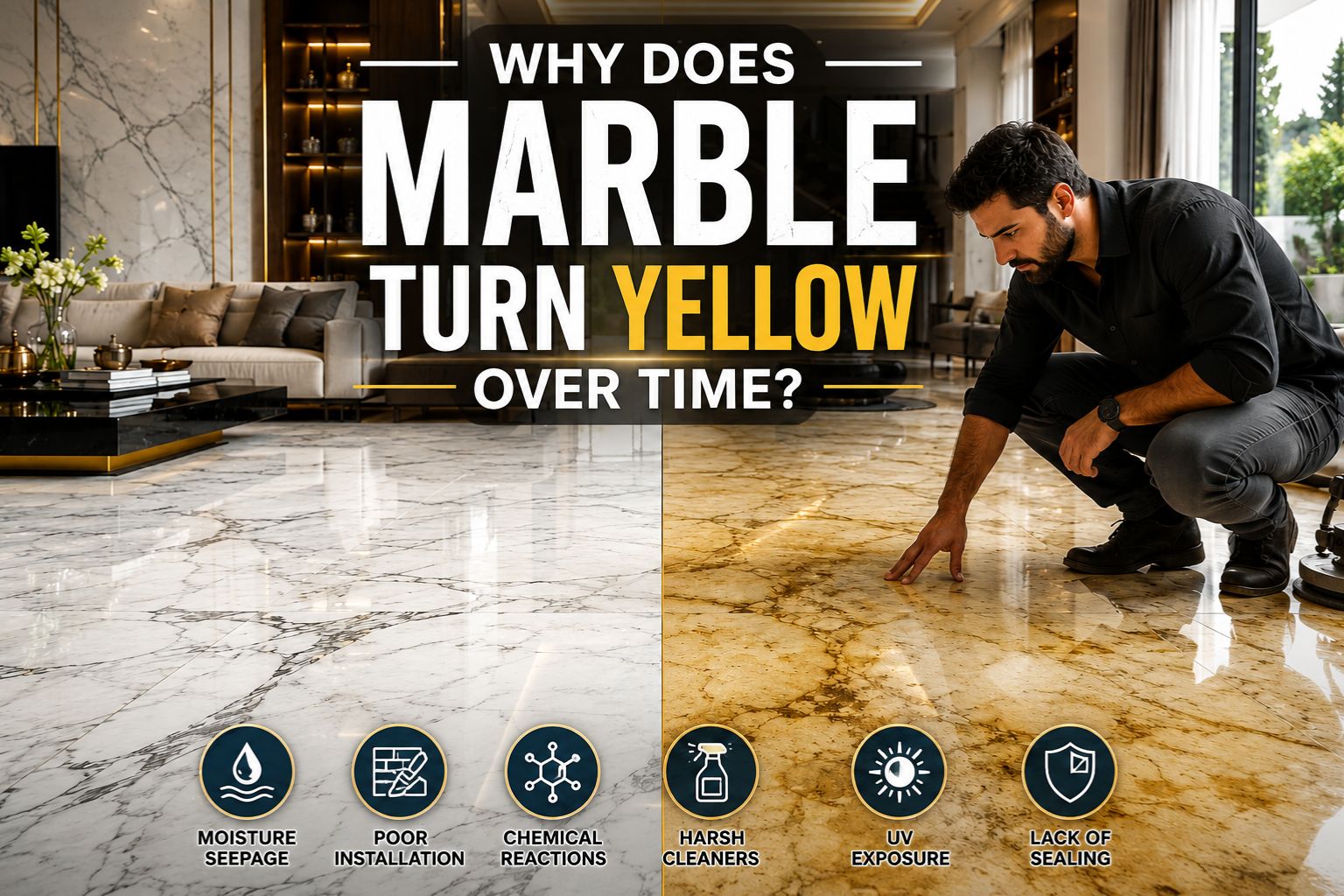
Marble is one of the most luxurious and timeless natural stones used in homes, hotels, villas, temples, and commercial spaces. From elegant white Italian marble to premium imported collections, marble instantly adds sophistication and value to interiors. However, one common problem many homeowners face after a few years is yellowing marble.
If your once-bright white marble has started looking dull, creamy, or yellowish, you are not alone.
According to stone expert Ankit Singhal, marble yellowing is one of the most misunderstood problems in the stone industry. Many people think marble becomes old and naturally turns yellow. In reality, there are several scientific and maintenance-related reasons behind this issue.
In this detailed guide, we will explain:
- Why marble turns yellow
- Common mistakes homeowners make
- How moisture damages marble
- Chemical reactions inside natural stone
- Prevention methods
- Professional restoration tips
- Best maintenance practices for long-lasting marble beauty
Understanding Marble: Why It Changes Color
Marble is a natural stone formed over millions of years through heat and pressure. It contains minerals like calcite, iron deposits, organic particles, and other natural compounds.
Over time, these minerals react with:
- Moisture
- Air pollution
- Cleaning chemicals
- Hard water
- Improper installation materials
- Sunlight exposure
These reactions can slowly change the appearance of the marble surface, especially in white and light-colored marble.
Some marble types are more sensitive than others, particularly:
- Statuario Marble
- Carrara Marble
- Volakas Marble
- Pure White Marble
- Thassos White Marble
Top Reasons Marble Turns Yellow Over Time
1. Moisture Seepage Inside Marble
One of the biggest causes of yellow marble is trapped moisture.
Marble is naturally porous. When water enters through the surface, joints, or underneath the slab, it reacts with minerals inside the stone. Over time, this creates yellow or brown discoloration.
Common Sources of Moisture:
- Water leakage
- Damp flooring
- Improper waterproofing
- Wet mopping every day
- Bathroom humidity
- Underground moisture
Signs of Moisture Damage:
- Yellow patches
- Dark stains
- Uneven discoloration
- Cloudy appearance
- Dull surface
According to Ankit Singhal, moisture-related yellowing is extremely common in Indian homes because many installations are done without proper curing and waterproofing systems.
2. Use of Low-Quality Adhesives or Cement
Many contractors use ordinary grey cement while installing white marble. Over time, chemicals and minerals from the cement migrate upward into the marble surface.
This causes:
- Yellow spots
- Rust-like marks
- Permanent discoloration
Professional stone experts always recommend:
- White cement
- High-quality marble adhesives
- Proper installation compounds
Cheap installation may save money initially but can destroy expensive marble permanently.
3. Iron Oxidation Inside Marble
Natural marble sometimes contains tiny iron particles.
When exposed to water and oxygen, these particles oxidize — similar to rust forming on metal.
This oxidation creates:
- Yellow veins
- Brownish stains
- Rust-colored patches
This problem is especially visible in white marble because lighter surfaces highlight discoloration more clearly.
4. Wrong Cleaning Chemicals
Many homeowners unknowingly damage marble using:
- Acidic cleaners
- Bathroom cleaners
- Vinegar
- Harsh detergents
- Bleach
- Floor acids
Marble reacts badly to acidic substances because it mainly contains calcium carbonate.
Harsh cleaners weaken the polish and trigger chemical reactions that make the surface appear yellow or dull.
Never Use:
- Toilet cleaner
- Acid cleaner
- Lemon-based chemicals
- Strong disinfectants directly on marble
Instead, use pH-neutral marble cleaners recommended by professionals.
5. Lack of Proper Sealing
Sealing protects marble from absorbing water, oil, and dirt.
Without sealing:
- Moisture enters easily
- Dirt accumulates inside pores
- Oxidation increases
- Yellowing appears faster
Premium marble should be resealed periodically depending on usage.
Recommended Sealing Frequency:
- High traffic areas: every 1–2 years
- Luxury homes: every 2–3 years
- Commercial spaces: annually
6. Sunlight and UV Exposure
Direct sunlight can gradually alter the color of certain marble varieties.
Over long periods:
- White marble may become creamish
- Resin-filled marble can discolor
- Polish may fade unevenly
Outdoor marble surfaces are more vulnerable to UV-related yellowing.
7. Poor Maintenance Habits
Daily habits also impact marble appearance.
Common Mistakes:
- Using excessive water during mopping
- Leaving spills unattended
- Dragging metal furniture
- Ignoring stains
- Using dirty mops
Proper maintenance is essential for preserving natural stone beauty.
How to Prevent Marble from Turning Yellow
Choose Premium Quality Marble
High-quality marble from trusted suppliers undergoes better selection and processing.
Inferior marble often contains:
- Excess mineral impurities
- Weak structure
- Poor resin quality
Always purchase marble from experienced and reputed stone companies.
Ensure Professional Installation
Installation quality matters as much as marble quality.
Professional Installation Includes:
- Proper leveling
- Waterproof base preparation
- Correct adhesive
- Expansion joints
- Moisture barrier systems
Expert installation significantly reduces long-term problems.
Use pH-Neutral Marble Cleaners
Safe marble cleaners help preserve:
- Shine
- Color
- Polish
- Surface integrity
Avoid experimenting with household chemicals.
Seal Marble Regularly
Marble sealing acts like a protective shield.
Benefits include:
- Reduced moisture absorption
- Better stain resistance
- Longer polish life
- Prevention of yellow patches
Professional sealing can dramatically increase marble longevity.
Clean Spills Immediately
Tea, coffee, wine, turmeric, oil, and acidic liquids can stain marble quickly.
Always wipe spills immediately using:
- Soft microfiber cloth
- Clean water
- Mild marble cleaner
Avoid Excess Water
Too much water weakens marble over time.
Use:
- Damp mop instead of wet mop
- Soft cloth cleaning
- Controlled moisture cleaning methods
Can Yellow Marble Be Restored?
Yes — in many cases, yellow marble can be restored professionally.
Restoration depends on:
- Severity of discoloration
- Source of staining
- Marble type
- Age of damage
Professional Marble Restoration Methods:
- Diamond polishing
- Poultice treatment
- Deep cleaning
- Crystallization
- Moisture extraction
- Surface honing
However, severe internal yellowing may become permanent if ignored for years.
Expert Advice from Ankit Singhal
According to Ankit Singhal:
“Most marble yellowing problems happen because people focus only on marble price and ignore installation quality, sealing, and maintenance. Premium marble requires professional handling from day one.”
He also explains that investing in quality installation and expert guidance can save homeowners lakhs of rupees in future restoration costs.
Best Marble Maintenance Tips for Long-Term Shine
Daily Care
- Use soft microfiber cloth
- Dry mop dust regularly
- Clean spills immediately
Weekly Care
- Use marble-safe cleaner
- Avoid excessive water
Monthly Care
- Inspect joints and corners
- Check for moisture signs
Annual Care
- Professional polishing
- Sealing treatment
- Surface inspection
Why White Marble Needs Extra Care
White marble is highly luxurious but also more sensitive to:
- Stains
- Moisture
- Oxidation
- Yellowing
Popular white marbles like:
- Statuario
- Carrara
- Thassos
- Volakas
require expert maintenance for long-lasting elegance.
About the Book: “THE SECRETS OF MARBLE INDUSTRY”
THE SECRETS OF MARBLE INDUSTRY is an educational guide created to help homeowners, architects, builders, and interior designers understand the real marble industry.
The book covers:
- Marble quality secrets
- Installation techniques
- Pricing truths
- Maintenance methods
- Common industry mistakes
- Luxury stone selection guidance
It is becoming a valuable knowledge resource for anyone planning premium marble interiors.
5-Star Customer Reviews
⭐⭐⭐⭐⭐ Review by Rajesh Mehta, Jaipur
“We were worried because our white marble flooring started turning yellow within three years. After following expert guidance from Ankit Singhal, we understood the real issue was moisture beneath the flooring. Extremely informative and practical advice.”
⭐⭐⭐⭐⭐ Review by Priya Sharma, Delhi
“The knowledge shared in THE SECRETS OF MARBLE INDUSTRY completely changed how we maintain our marble. We stopped using harsh cleaners and the shine improved beautifully. Highly recommended for every homeowner.”
⭐⭐⭐⭐⭐ Review by Amit Bansal, Gurgaon
“Very few people explain marble problems in such a simple and honest way. This guide helped us protect our imported marble investment. Excellent expertise and genuine industry knowledge.”
⭐⭐⭐⭐⭐ Review by Neha Agarwal, Mumbai
“We learned that poor installation was the main reason behind our marble discoloration. The information provided by Ankit Singhal was far more useful than what contractors told us.”
⭐⭐⭐⭐⭐ Review by Karan Jain, Ahmedabad
“If you are investing in luxury marble, this knowledge is essential. The maintenance tips are practical, easy to follow, and genuinely effective.”
Frequently Asked Questions (FAQs)
Why does white marble turn yellow?
White marble turns yellow mainly because of moisture absorption, oxidation, improper installation materials, harsh cleaning chemicals, and lack of sealing.
Can yellow marble become white again?
In many cases, yes. Professional marble restoration techniques such as polishing and deep cleaning can restore marble appearance depending on the severity of damage.
Is yellow marble a sign of poor quality?
Not always. Even premium marble can turn yellow if installation and maintenance are improper.
Does water damage marble?
Yes. Excess moisture is one of the biggest causes of marble yellowing and discoloration.
Which cleaner is safe for marble?
Only pH-neutral marble cleaners specifically designed for natural stone surfaces are considered safe.
How often should marble be sealed?
Generally every 1–3 years depending on marble type and usage conditions.
Can sunlight turn marble yellow?
Yes. Continuous UV exposure may cause certain marble varieties to discolor over time.
Is marble polishing necessary?
Yes. Periodic professional polishing helps maintain shine, remove dullness, and improve marble lifespan.
Final Thoughts
Marble is a timeless luxury material, but maintaining its beauty requires proper knowledge and care. Yellowing is not just an aging issue — it is usually the result of moisture, poor installation, chemical damage, or improper maintenance.
By understanding the real causes behind marble discoloration, homeowners can protect their investment for decades.
Expert guidance from Ankit Singhal helps homeowners, architects, and builders make smarter decisions regarding marble selection, installation, and maintenance.
If you truly want your marble to remain elegant, glossy, and luxurious for years, professional knowledge is essential.
Contact Us
Stone Expert: Ankit Singhal
Book: THE SECRETS OF MARBLE INDUSTRY
📞 Phone: +91 92521 01111
📧 Email: ceo@shreeramexpo.in