

Understanding Natural Marble Veins, Fissures and Cracks
Natural marble brings timeless beauty to residential and commercial interiors. Its distinctive patterns make every slab visually unique. However, buyers often confuse natural veins, fissures and cracks.
Although these features may look similar, their characteristics differ significantly. Understanding these differences helps homeowners make informed purchasing decisions.
Moreover, proper marble inspection prevents unexpected problems during fabrication and installation. Therefore, buyers should understand these natural characteristics before selecting their slabs.

What Are Natural Marble Veins?
Marble veins are natural mineral patterns formed during geological processes. They appear as lines, streaks, bands or flowing patterns.
These patterns often contain minerals such as calcite, quartz and iron compounds. Consequently, their colours vary between white, grey, gold, brown and black.
Popular Italian marbles showcase beautiful natural veining. For example, Statuario, Calacatta and Carrara feature distinctive vein structures.
Veins contribute significantly to marble’s visual appeal. Designers often use these patterns for luxurious flooring, countertops and feature walls.
Explore our guide to Italian Marble Selection for expert guidance.
What Are Marble Fissures?
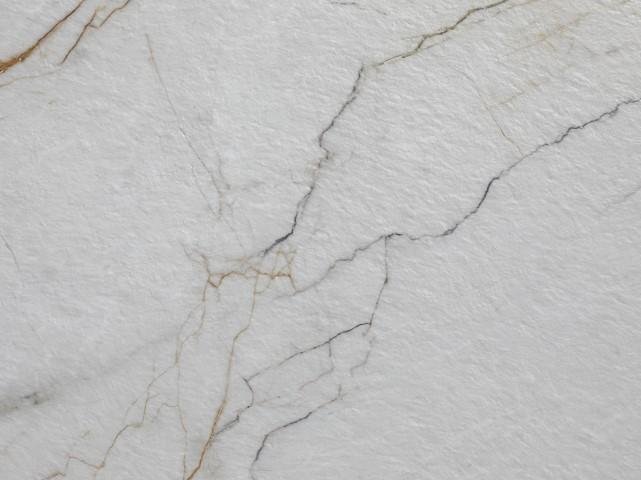
Fissures are naturally occurring separations within stone structures. They can develop during geological formation and subsequent pressure changes.
Some fissures appear as fine, hairline markings. Others follow existing mineral boundaries or natural stone patterns.
Importantly, not every fissure indicates structural damage. Some remain closed or contain mineral fillings.
However, their condition and location matter considerably. Open or weakly filled fissures may affect stone performance.
Therefore, buyers should inspect fissures carefully before approving slabs. Professional assessment becomes particularly important for stairs and countertops.
What Are Cracks in Marble?
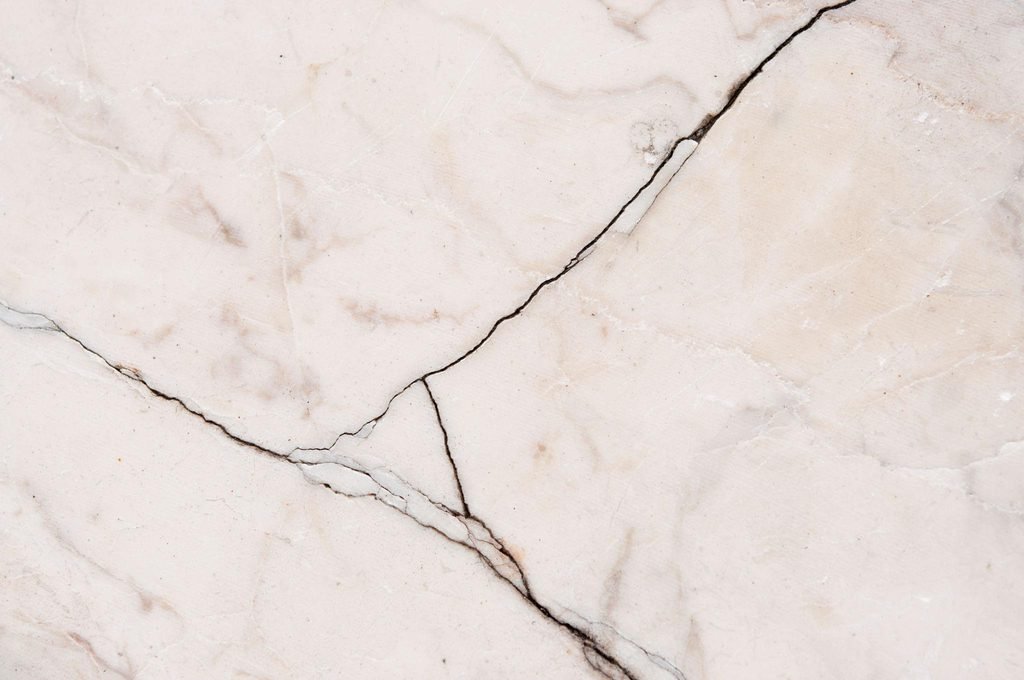
Cracks represent fractures or breaks within the stone. They can develop during quarrying, transportation, fabrication or installation.
Unlike decorative veins, cracks may compromise structural integrity. Furthermore, certain cracks can expand under pressure or movement.
Common causes include:
- Improper handling during transportation.
- Mechanical impact or accidental damage.
- Excessive pressure during fabrication.
- Incorrect installation techniques.
- Structural movement or inadequate support.
Consequently, buyers should never ignore suspicious cracks. Request professional inspection before accepting affected slabs.
Natural Marble Veins vs Fissures vs Cracks
Understanding their differences makes marble selection easier.
| Feature | Veins | Fissures | Cracks |
|---|---|---|---|
| Appearance | Mineral patterns | Fine separations | Visible fractures |
| Formation | Geological processes | Natural geological separation | Natural or mechanical damage |
| Typical appearance | Flowing lines | Hairline markings | Broken or separated areas |
| Structural concern | Depends on mineral structure | Depends on condition | Often significant |
| Inspection | Visual examination | Close inspection | Professional assessment |
Remember, appearance alone cannot establish structural soundness. Therefore, technical inspection remains essential.
How to Identify Potential Marble Cracks Before Buying
Careful inspection helps buyers avoid unnecessary expenses. Follow these practical checks before approving marble slabs.
1. Examine the Surface Carefully
First, inspect the entire polished surface under proper lighting. Look for irregular lines, openings and visible separations.
2. Inspect the Backside
Next, examine the slab’s backside for corresponding fractures. Backside inspection can reveal issues hidden by surface polishing.
3. Check Filled Areas
Some manufacturers use epoxy or resin during fabrication. Therefore, ask about repairs and filling before purchasing.
4. Review the Slab Edges
Additionally, inspect corners and edges for chips or fractures. These areas deserve particular attention before cutting.
5. Request Actual Slab Photographs
Finally, request photographs of the exact slabs. Sample photographs cannot guarantee the appearance of an entire lot.
Does Natural Veining Affect Marble Quality?
Natural veining does not automatically indicate poor-quality marble. However, mineral composition, vein orientation and structural continuity matter.
Some veins contain strong mineral fillings. Others may represent weaker geological boundaries.
Therefore, buyers should evaluate the stone’s intended application. Flooring, stairs and countertops have different performance requirements.
For additional technical guidance, explore our Marble Thickness, Grade and Finishing Guide.
Why Professional Marble Inspection Matters
Selecting marble involves more than choosing attractive colours. Buyers must also consider thickness, quality, finishing and structural characteristics.
Furthermore, incorrect selection can increase fabrication and replacement expenses.
Stone Expert, founded by Ankit Singhal, provides independent marble selection guidance. The consultancy helps homeowners understand stone characteristics before purchasing.
Its services include:
- Marble quality and slab inspection.
- Natural vein and fissure assessment.
- Thickness and grade verification.
- Real versus duplicate Italian marble verification.
- Material recommendations for different applications.
- Bookmatching and design guidance.
Explore Stone Expert Marble Consultation for professional assistance.
Final Thoughts
Natural marble veins, fissures and cracks represent different stone characteristics. Understanding these differences helps buyers make better decisions.
Natural veins create beautiful patterns. Meanwhile, fissures require careful assessment, and cracks may indicate structural concerns.
Therefore, always inspect actual slabs before finalising your purchase. Professional guidance can also help prevent expensive mistakes.
Choose natural stone confidently with expert guidance from Stone Expert.
Consult Stone Expert – Ankit Singhal
Expert Insight By Ankit Singhal
Author of The Secret of Marble Industry
Founder – Stone Expert
Contact Details:
- Website: https://www.stoneexpert.in/
- Phone / WhatsApp: +91 92521 01111
- Email: ceo@shreeramexpo.in
Book Your Marble Consultation:
https://www.stoneexpert.in/contact-us/
Stone Expert – Official Address
Stone Expert, Makrana Road, RIICO Industrial Area, Kishangarh, Khatoli, Rajasthan – 305801, India.
Google Maps Location:
Get Directions to Stone Expert


Pingback: Why Every Homeowner Should Hire a Marble Consultant.