How Marble Blocks Are Selected at the Quarry
Marble begins its journey deep inside natural stone quarries. However, not every block meets premium quality standards. Careful selection ensures only the finest marble reaches manufacturers, architects, and homeowners. Every stage requires skilled inspection, advanced equipment, and strict quality control.
This guide explains how marble blocks are selected at the quarry and why proper selection affects the final product.
Why Marble Block Selection Matters
Selecting the right marble block determines the strength, appearance, and durability of finished slabs. Moreover, premium blocks produce fewer defects during cutting and polishing. As a result, customers receive high-quality marble with consistent patterns and excellent performance.
Proper block selection also reduces waste and improves production efficiency.
Step 1: Geological Survey and Deposit Evaluation
The process begins with a detailed geological survey. Experts examine the marble deposit before excavation starts. They study:
- Stone composition
- Mineral quality
- Color consistency
- Vein direction
- Natural fractures
- Reserve size
Consequently, quarry owners identify the best extraction zones while minimizing unnecessary excavation.
Step 2: Visual Inspection of the Marble Deposit
After locating suitable deposits, experienced inspectors carefully examine the exposed marble surface.
They check for:
- Uniform color
- Attractive veining
- Surface cracks
- Mineral impurities
- Weather damage
- Structural stability
Only deposits with excellent visual quality move to the extraction stage.
Step 3: Controlled Marble Block Extraction
Modern quarries use advanced machinery to remove marble safely. Instead of blasting, operators prefer controlled cutting methods because they protect the natural structure.
Common extraction equipment includes:
- Diamond wire saws
- Chain saw machines
- Hydraulic splitters
- Drilling machines
- Excavators
- Cranes
As a result, large marble blocks remain intact with minimal internal damage.
Step 4: Initial Quality Assessment
Once extracted, every marble block undergoes another inspection.
Professionals evaluate:
- Block dimensions
- Surface condition
- Corner damage
- Internal cracks
- Natural defects
- Pattern continuity
At this stage, damaged blocks receive lower grades or move to alternative applications.
Step 5: Checking Color and Vein Consistency
Color consistency plays a major role in marble selection. Buyers expect matching slabs for flooring, wall cladding, and commercial projects.
Inspectors compare each block for:
- Background color
- Vein flow
- Pattern balance
- Shade variation
- Mineral distribution
Therefore, similar blocks remain grouped together for future production.
Step 6: Detecting Internal Defects
Surface inspection alone cannot reveal hidden flaws. Consequently, experienced quarry teams identify possible internal defects using careful examination techniques.
They look for:
- Hairline cracks
- Hidden fractures
- Weak zones
- Cavities
- Soft mineral pockets
Early detection prevents expensive losses during slab processing.
Step 7: Measuring Block Size
Large marble blocks offer greater production flexibility. Therefore, size directly influences commercial value.
Inspectors measure:
- Length
- Width
- Height
- Overall volume
- Weight
Larger blocks usually produce more slabs with lower processing waste.
Step 8: Marble Block Grading
After inspection, each block receives a quality grade.
Typical grading factors include:
A Marble Blocks
- Premium color consistency
- Excellent veining
- Minimal defects
- Large dimensions
- High commercial value
B Marble Blocks
- Minor color variation
- Small natural imperfections
- Good structural strength
- Suitable for standard applications
C Marble Blocks
- Visible cracks
- Higher mineral variation
- Smaller sizes
- Limited design applications
Step 9: Marking and Documentation
Each approved block receives a unique identification number.
The documentation records:
- Quarry location
- Block number
- Grade
- Dimensions
- Weight
- Color category
- Extraction date
As a result, complete traceability remains available throughout production.
Step 10: Transportation to Processing Units
Finally, selected marble blocks move to processing factories.
Heavy-duty cranes load the blocks onto specialized trucks. During transportation, operators secure every block carefully to prevent damage.
Once delivered, manufacturers begin:
- Block cutting
- Slab production
- Surface polishing
- Quality inspection
- Packaging
The entire process ensures premium marble reaches distributors and customers.
Factors That Influence Marble Block Selection
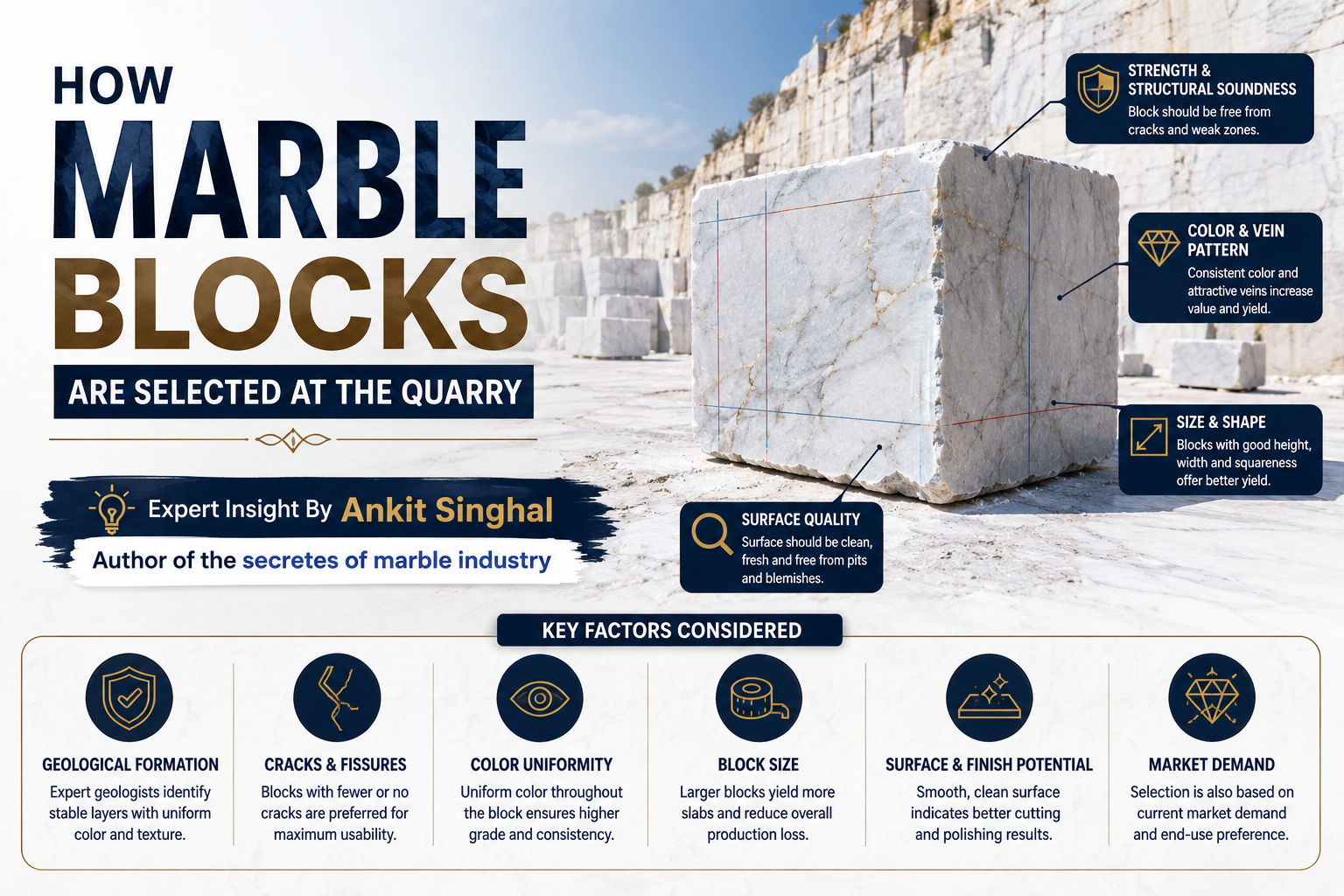
Several important factors determine whether a marble block qualifies for premium production.
These include:
- Natural beauty
- Structural integrity
- Color uniformity
- Vein alignment
- Block size
- Crack-free condition
- Market demand
- Processing efficiency
Together, these factors improve the overall quality of finished marble products.
Benefits of Proper Marble Block Selection
Selecting high-quality marble blocks offers many advantages.
These benefits include:
- Better slab yield
- Reduced production waste
- Superior polishing results
- Higher durability
- Consistent appearance
- Increased customer satisfaction
- Greater commercial value
Therefore, careful selection remains one of the most important stages in marble manufacturing.
Conclusion
Understanding how marble blocks are selected at the quarry highlights the importance of quality control before processing begins. Every inspection, measurement, and grading step contributes to producing premium marble slabs. From geological surveys to final transportation, experienced professionals ensure only the finest marble enters the manufacturing process. Consequently, architects, builders, and homeowners receive natural stone that delivers beauty, strength, and long-lasting performance.
Frequently Asked Questions
How are marble blocks selected at the quarry?
Experts inspect the marble for color, veining, cracks, size, and structural strength before approving blocks for processing.
Why is marble block grading important?
Grading helps manufacturers separate premium-quality blocks from lower-grade materials, ensuring consistent product quality.
What equipment is used to extract marble blocks?
Quarries commonly use diamond wire saws, chain saws, hydraulic splitters, cranes, excavators, and drilling machines.
What defects reduce the quality of marble blocks?
Internal cracks, fractures, mineral impurities, cavities, uneven color, and weather damage lower the commercial value of marble.
Can all extracted marble blocks be processed into slabs?
No. Only blocks that meet quality standards proceed to slab production, while lower-grade blocks serve alternative construction purposes.
Looking for Premium Marble Blocks, Marble Slabs, or Natural Stones?
Our experts are ready to help you choose the perfect stone for your residential, commercial, or export projects.
📞 Contact Us Today
📱 Phone: +91 92521 01111
📧 Email: ceo@shreeramexpo.in
📧 Alternate Email: shreeramexpo@gmail.com
🌐 Website: https://www.shreeramstones.com/
Why Choose Shree Ram Stones?
✅ Premium Quality Indian Marble & Granite
✅ Direct Quarry Supplier
✅ Factory Direct Pricing
✅ Custom Sizes & Finishes Available
✅ Worldwide Export Services
✅ Trusted by Architects, Builders & Interior Designers
💬 Request a Free Quote Today!
Whether you need marble blocks, marble slabs, granite, sandstone, or other natural stones, our team is here to provide expert guidance and the best pricing.