
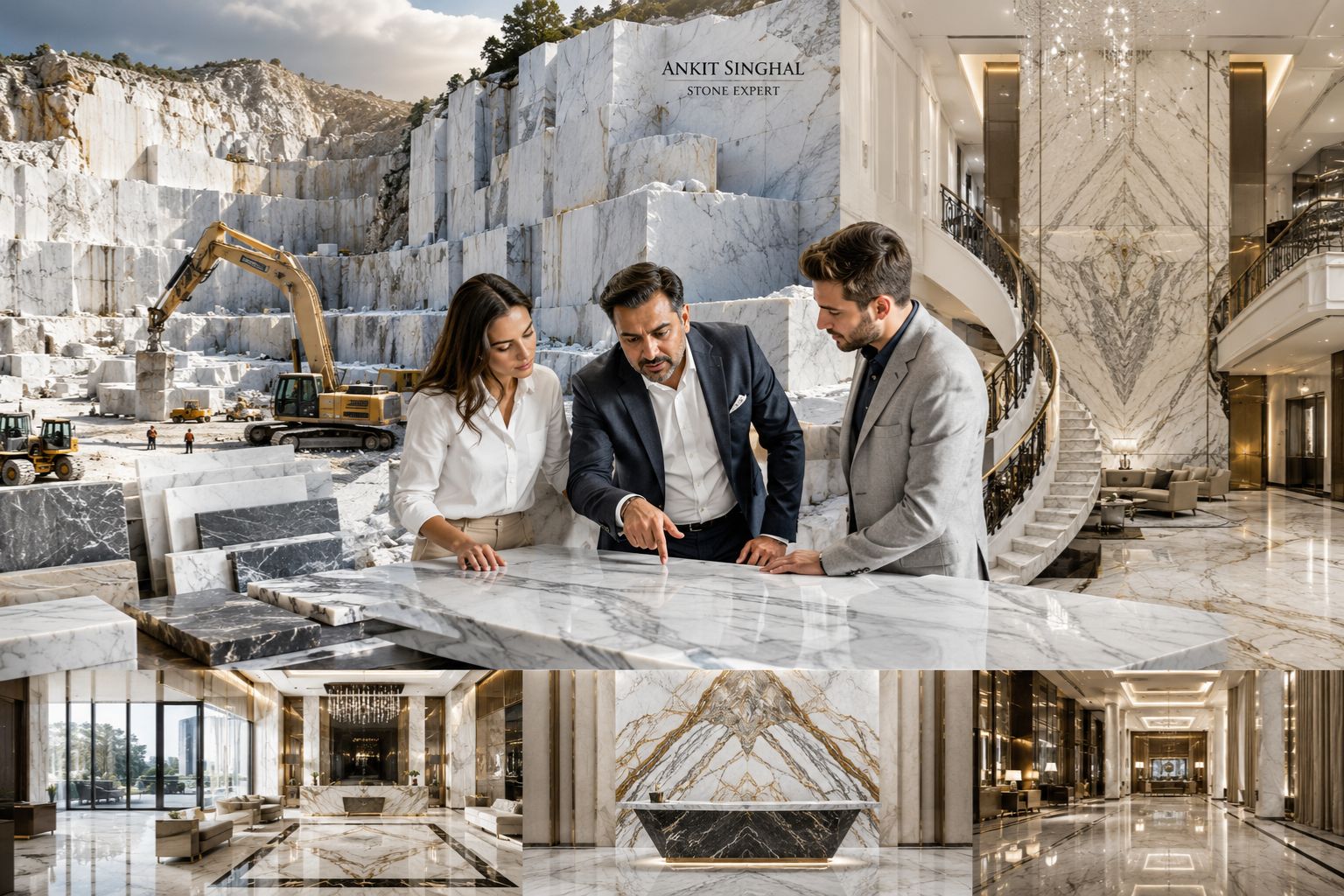
Natural marble is one of the most luxurious and timeless materials used in architecture and interior design. From grand hotel lobbies to modern villas, marble adds elegance, durability, and unmatched beauty. However, many buyers are surprised when they discover that marble quality can vary significantly from one quarry to another — even when the marble has the same name.
According to stone expert Ankit Singhal, author of the book “THE SECRETS OF MARBLE INDUSTRY,” understanding quarry differences is one of the most important steps before buying marble for homes, hotels, commercial projects, or luxury interiors.
In this complete guide, you will learn why marble quality changes from quarry to quarry, how quarry location affects marble appearance, and how to choose premium-quality marble for long-lasting luxury interiors.
What Does “Quarry to Quarry Difference” Mean?
A marble quarry is the natural source from where marble blocks are extracted. Every quarry has different geological conditions, mineral compositions, pressure levels, and natural formations developed over millions of years.
This is the main reason why:
- One white marble may look brighter than another
- Some marble has stronger veins
- Some marble absorbs more water
- Certain marble slabs polish better
- One quarry produces premium export-grade marble while another produces commercial quality
Even if two marbles have similar names, their quality, strength, shine, and durability may differ because they come from different quarries.
Why Marble Quality Changes Between Quarries
1. Natural Mineral Composition
Marble is formed from limestone under heat and pressure over millions of years. Different quarries contain different mineral combinations, including:
- Calcium
- Quartz
- Dolomite
- Iron oxide
- Graphite
- Silica
These minerals directly affect:
- Color consistency
- Surface shine
- Strength
- Durability
- Veining patterns
For example, a quarry with higher calcium purity may produce brighter white marble with superior polish.
2. Geological Pressure and Formation
The pressure and temperature during marble formation play a major role in determining quality.
High-pressure formation usually creates:
- Dense marble
- Better hardness
- Lower porosity
- Superior polishing quality
Lower-pressure formation may create:
- Softer marble
- More water absorption
- Uneven texture
- Reduced durability
This is why some marble lasts beautifully for decades while other marble loses shine quickly.
3. Quarry Depth Matters
According to Ankit Singhal, marble extracted from deeper quarry levels is often considered more premium.
Why?
Deeper quarry marble generally has:
- Better density
- Richer color tone
- Stronger structure
- More uniform texture
- Fewer surface cracks
Upper-layer marble may contain:
- Weathering effects
- Color variations
- More natural defects
This difference becomes highly important in luxury residential and hotel projects.
4. Color Consistency and Veining
Every quarry has its own visual identity.
Some quarries produce:
- Pure white backgrounds
- Soft elegant veins
- Uniform patterns
Others may produce:
- Heavy dark veins
- Uneven texture
- Color patches
- More movement
For premium interiors, designers usually prefer quarries known for consistency because matching slabs become easier for flooring, walls, staircases, and bookmatching applications.
5. Block Selection and Cutting Quality
Even inside the same quarry, block selection affects final marble quality.
Premium suppliers carefully select:
- Crack-free blocks
- Uniform texture
- Proper thickness
- Better polishing capacity
Poor-quality selection may result in:
- Resin-filled slabs
- Hidden cracks
- Shade variation
- Weak structure
This is why choosing an experienced marble supplier is extremely important.
6. Water Absorption Capacity
Different quarries produce marble with different porosity levels.
Low-porosity marble:
- Lasts longer
- Resists stains better
- Maintains polish
- Requires less maintenance
High-porosity marble:
- Absorbs moisture quickly
- Develops stains
- May lose shine faster
For kitchens, bathrooms, hotels, and high-traffic areas, low-absorption marble is always recommended.
7. Polishing and Surface Finish
Not all marble polishes equally.
Premium quarry marble can achieve:
- Mirror-like shine
- Smooth texture
- Long-lasting finish
Lower-quality marble may:
- Lose shine quickly
- Develop dullness
- Show scratches easily
The final appearance of luxury interiors depends heavily on marble polishing quality.
8. Structural Strength and Durability
Some marble quarries produce naturally stronger stone suitable for:
- Flooring
- Staircases
- Commercial projects
- Hotel lobbies
Others are better for:
- Wall cladding
- Decorative applications
- Low-traffic areas
Using the wrong marble in high-traffic spaces can create maintenance problems in the future.
How to Identify Premium Marble Quality
Stone expert Ankit Singhal recommends checking these important factors before buying marble.
Check Surface Uniformity
Good marble should have:
- Even texture
- Balanced veining
- Consistent background color
Avoid slabs with:
- Excessive patches
- Random dull areas
- Unnatural color variation
Inspect for Cracks and Pinholes
Always inspect slabs carefully under proper lighting.
Look for:
- Hairline cracks
- Pinholes
- Resin filling
- Surface damage
Premium marble should have minimal defects.
Test Polish Reflection
A high-quality polished marble slab should reflect light clearly and evenly.
Strong reflection usually indicates:
- Better density
- Better finishing
- Higher calcium quality
Water Absorption Test
Place a few drops of water on the marble surface.
If water absorbs quickly:
- Marble may be porous
- Maintenance may increase
Low absorption indicates higher quality.
Thickness and Cutting Accuracy
Proper thickness is essential for durability.
Premium marble slabs usually have:
- Accurate cutting
- Uniform thickness
- Better edge finishing
Poor cutting may create installation issues.
Why Quarry Knowledge Is Important for Buyers
Many customers focus only on marble name and price. However, quarry origin is equally important.
Understanding quarry quality helps buyers:
- Avoid low-grade material
- Select long-lasting marble
- Get better value for money
- Reduce future maintenance
- Achieve luxury finishing
This knowledge becomes even more important in:
- Villas
- Luxury apartments
- Hotels
- Commercial spaces
- Premium retail showrooms
Common Marble Quality Problems Caused by Poor Quarry Selection
1. Shade Variation
Large projects may look inconsistent if slabs come from mixed quarry sources.
2. Cracking After Installation
Weak marble structure can create cracks after fitting.
3. Yellowing Over Time
Impure marble with iron content may develop yellow patches later.
4. Polish Loss
Low-density marble may lose shine faster in high-traffic areas.
5. High Maintenance Costs
Porous marble requires frequent polishing and sealing.
Importance of Buying from Trusted Marble Experts
According to Ankit Singhal, the marble industry contains wide quality variations. Buyers without proper guidance may unknowingly purchase lower-grade material at premium prices.
A trusted marble expert helps customers:
- Understand quarry origin
- Compare quality grades
- Select correct applications
- Match slabs properly
- Choose durable options
This saves both money and future maintenance costs.
THE SECRETS OF MARBLE INDUSTRY
The book “THE SECRETS OF MARBLE INDUSTRY” by Ankit Singhal provides valuable knowledge about:
- Marble selection
- Quarry quality
- Pricing secrets
- Marble grading
- Installation guidance
- Luxury stone buying tips
The book is highly useful for:
- Homeowners
- Architects
- Interior designers
- Builders
- Hotel developers
- Stone industry professionals
Best Applications for Premium Quarry Marble
High-quality quarry marble is ideal for:
Luxury Flooring
Creates elegant and timeless interiors.
Feature Walls
Bookmatched marble enhances luxury aesthetics.
Staircases
Strong marble ensures durability and beauty.
Hotel Lobbies
Premium polish creates grand visual impact.
Bathroom Interiors
Low-porosity marble improves longevity.
Kitchen Counter Areas
Dense marble performs better against stains and moisture.
How Architects Choose Premium Marble
Professional architects and designers usually check:
- Quarry reputation
- Slab consistency
- Polish quality
- Technical strength
- Water absorption
- Long-term durability
This is why luxury projects rarely compromise on marble source quality.
Future of Premium Marble Industry
The modern marble industry is moving toward:
- Higher-quality quarry sourcing
- Advanced cutting technology
- Better polishing systems
- Luxury imported marble trends
- Sustainable stone processing
Customers today are more aware of quality, durability, and finishing standards than ever before.
Final Thoughts
Marble is not just a stone — it is a natural masterpiece formed over millions of years. The quality of marble depends heavily on the quarry from which it is extracted.
Understanding quarry differences helps customers make smarter decisions and avoid costly mistakes. Whether you are designing a luxury villa, hotel, office, or dream home, choosing premium quarry marble ensures beauty, durability, and timeless elegance.
Stone expert Ankit Singhal, author of “THE SECRETS OF MARBLE INDUSTRY,” believes that educated buyers always achieve better results because they understand the hidden differences behind marble quality.
Investing in premium marble today creates interiors that remain luxurious for generations.
Frequently Asked Questions (FAQs)
Why does marble quality vary from quarry to quarry?
Different geological conditions, mineral composition, and formation pressure create variations in marble quality, color, strength, and polish.
Which marble quarry produces the best quality marble?
Premium quarries with high calcium purity, low porosity, and strong density usually produce superior-quality marble.
How can I identify premium marble?
Check surface consistency, polish quality, water absorption, slab thickness, and crack-free structure before buying.
Why is quarry origin important in marble selection?
Quarry origin affects durability, shine, texture, maintenance, and long-term performance of marble.
Does deeper quarry marble have better quality?
In many cases, deeper quarry marble offers better density, consistency, and durability compared to upper-layer extraction.
What causes marble to lose shine?
Low-density marble, high porosity, poor polishing, and heavy usage may reduce surface shine over time.
Is imported marble always better than Indian marble?
Not always. Both imported and Indian marble can be premium quality depending on quarry source and processing standards.
Who should read THE SECRETS OF MARBLE INDUSTRY?
Homeowners, architects, interior designers, builders, hotel developers, and marble buyers can all benefit from the book.
Contact Us
Stone Expert: Ankit Singhal
Author of: THE SECRETS OF MARBLE INDUSTRY
📞 Contact: +91 92521 01111
📧 Email: ceo@shreeramexpo.in
Discover premium marble knowledge, luxury stone guidance, and expert insights for world-class interior projects.