
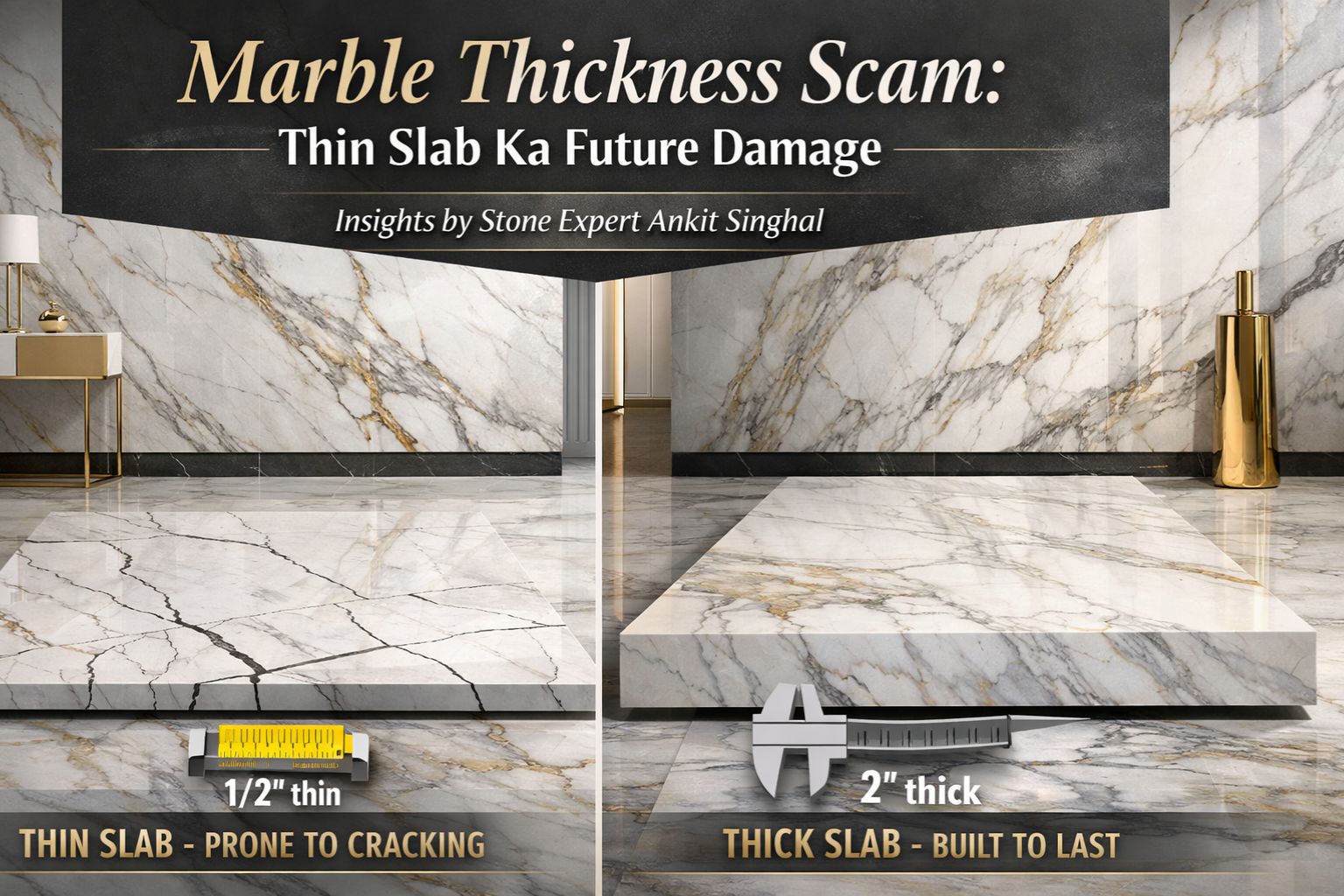
Marble has always been synonymous with luxury, elegance, and timeless appeal. From palaces and temples to ultra-modern villas, marble is the first choice for architects, interior designers, and homeowners. However, there’s a hidden threat lurking in the marble industry that every buyer should be aware of – the thin slab scam.
In this blog, stone expert Ankit Singhal unveils the risks of buying thin marble slabs, the long-term damages, and how to safeguard your investment.
What is the Marble Thickness Scam?
The marble thickness scam is a growing issue in the natural stone industry. Many suppliers market thin slabs (typically 10-15mm) as standard-quality marble, while the actual industry norm for durable, premium-grade marble is 18-20mm.
Thin slabs are cheaper to produce and transport, making them an attractive option for businesses looking to maximize profit. But what seems like a cost-saving deal upfront can turn into a nightmare for homeowners in the future.
How Thin Slabs Cause Future Damage
- Cracking and Breaking
Marble is a natural stone that requires sufficient thickness to maintain strength. Thin slabs are prone to cracks and breakage under weight or pressure. For flooring or countertops, even minor stress can lead to visible damage in just a few months. - Uneven Surface and Warping
Over time, thin slabs may warp or become uneven, especially in areas exposed to heat, moisture, or heavy traffic. Uneven surfaces not only look unattractive but also pose safety hazards. - Shortened Lifespan
Premium marble is an investment meant to last decades. Thin slabs reduce the lifespan of marble installations drastically, forcing homeowners to spend more on repairs or replacements. - Compromised Aesthetics
Marble’s beauty lies in its natural veining and shine. Thin slabs may lose luster faster, absorb stains more easily, and fail to reflect light the way thicker slabs do, ruining the luxurious effect you paid for.
Expert Advice from Ankit Singhal
“Many buyers are unaware that the marble thickness affects both durability and value. A thin slab may save money initially, but the future damage and maintenance costs outweigh any short-term benefits.” – Ankit Singhal, Stone Industry Expert
He emphasizes that a 18-20mm slab is ideal for flooring, countertops, and high-traffic areas. Thinner slabs can be used for wall cladding, but even then, buyers must ensure professional installation and backing support.
How to Identify Thin Slabs Before Buying
Here are some tips to avoid falling victim to the marble thickness scam:
- Ask for Exact Measurements
Don’t settle for vague claims like “standard thickness.” Use a measuring tape or ask the supplier to provide a calibrated thickness report. - Check the Slab Weight
Heavier slabs indicate proper thickness. If a slab feels unusually light for its size, it might be thinner than advertised. - Request a Sample
Inspect a small section for durability. You can even apply slight pressure or tap the slab to check for sound and sturdiness. - Verify Supplier Credentials
Work with trusted suppliers like Shree Ram Expo or experts recommended by industry professionals. Certified suppliers ensure consistent quality. - Professional Installation Check
Even if the slab is of correct thickness, poor installation can lead to cracks. Always hire trained installers who understand marble handling.
Real-Life Example
A luxury villa owner in Jaipur installed thin Calacatta Gold marble slabs for flooring. Within six months, several slabs cracked under the weight of furniture, leading to costly replacements. Had he chosen 20mm slabs as recommended by Ankit Singhal, the issue could have been avoided.
📲 Facing confusion about marble thickness? Talk to our stone expert now!
WhatsApp Now
Types of Marble Most Affected by Thin Slab Scams
- Italian Statuario Marble – Prone to cracking if slabs are below 20mm.
- Calacatta Gold Marble – Thin slabs lose aesthetic appeal faster.
- Botticino Marble – Softer marble, easily damaged if thin.
- Black Galaxy Granite – Though granite is stronger, thin slabs can still warp.
- Namibia White Marble – Thin slabs reduce shine and longevity.
Always check thickness even for reputed varieties. Premium appearance doesn’t guarantee slab strength.
Long-Term Financial Impact
Investing in thin marble slabs might save 10-20% upfront, but the long-term costs are significant:
- Repair Costs: Cracked slabs require professional repair or replacement.
- Resurfacing: Warped or dull marble may need resurfacing.
- Loss of Property Value: Homes with damaged marble flooring lose luxury appeal.
Pro Tip: A thicker slab is an investment in your home’s longevity and resale value.
FAQs About Marble Thickness and Installation
Q1: What is the ideal thickness for marble flooring?
A: 20-30mm is recommended for premium durability and minimal risk of cracking.
Q2: Can thin marble be used for walls?
A: Yes, but ensure professional backing and secure installation to prevent warping.
Q3: How do I verify the marble slab thickness?
A: Measure with a caliper or ask the supplier for official thickness documentation.
Q4: Are all thin slabs a scam?
A: Not all. Some thin slabs are designed for specific applications like wall cladding. The scam happens when thin slabs are sold for flooring or heavy-use surfaces without disclosure.
Q5: Who can I trust for authentic marble slabs?
A: Work with certified suppliers like Shree Ram Stones or consult experts like Ankit Singhal.
📲 Want to ensure your marble investment lasts decades? Connect with us instantly!
Chat on WhatsApp
How Shree Ram Stones Ensures Authentic Marble
At Shree Ram Stones, transparency is key:
- Certified Slabs: Every slab comes with a thickness certificate.
- Quality Check: Strict inspection before dispatch.
- Expert Guidance: Stone experts guide buyers on the right slab thickness.
- After-Sales Support: Assistance with installation and maintenance.
Contact Us Today:
📞 +91 92521 01111
✉️ ceo@shreeramexpo.in
The Secrets of the Marble Industry
For those interested in a deeper dive, our book “THE SECRETS OF MARBLE INDUSTRY” by Ankit Singhal reveals:
- Insider tips on identifying genuine marble.
- Hidden scams in thickness, veining, and polishing.
- How to negotiate with suppliers for fair pricing.
- Maintenance hacks to preserve marble for decades.
Investing in knowledge saves thousands of rupees on faulty marble slabs.
📲 Need expert advice before buying marble? Message us now!
Instant WhatsApp Help
Conclusion
Marble is more than just a flooring or cladding material – it’s an investment in luxury, aesthetics, and longevity. Falling prey to the marble thickness scam can turn a dream home into a costly repair project.
Remember:
- Always check slab thickness before purchase.
- Prefer 20-30mm slabs for flooring and countertops.
- Consult industry experts like Ankit Singhal.
- Work with trusted suppliers like Shree Ram Stones.
With the right precautions, your marble will remain timeless, beautiful, and strong for generations. Don’t compromise your dream home with thin slabs!
Contact Information
Stone Expert – Your Trusted Marble Partner
📞 +91 92521 01111
✉️ ceo@shreeramexpo.in
Book: THE SECRETS OF MARBLE INDUSTRY
📲 Click here to WhatsApp us for a free consultation!
WhatsApp Now