Expert Insights by Stone Expert Ankit Singhal
Marble has long been celebrated for its elegance, timeless beauty, and ability to elevate any interior space. From luxurious flooring to grand countertops, marble conveys sophistication. However, not all marble is created equal, and not every polishing method yields long-term results.
In the quest for flawless, glossy surfaces, many homeowners and designers often fall into the trap of over-polishing marble. While an ultra-shiny surface may look stunning initially, it can lead to serious long-term damage, including structural weakening, increased maintenance, and a reduction in marble’s natural charm.
In this blog, stone expert Ankit Singhal explains why over-polishing marble is a short-term solution with long-term consequences and how to maintain marble’s elegance for decades.
What Is Over-Polished Marble?
Marble polishing is a standard process in the stone industry, where the surface is polished to bring out its natural shine. However, excessive polishing—whether through aggressive mechanical polishing or repeated chemical treatments—can create problems such as:
- Loss of natural texture: Marble is prized for its unique veining and soft, luxurious feel. Over-polishing can strip these subtle features.
- Thin surface layer: Marble has a natural crystalline structure. Polishing too aggressively can reduce the thickness of the surface, making it more prone to cracks.
- Short-lived shine: Excessive polishing may provide a reflective mirror-like finish, but it fades faster and requires frequent re-polishing.
According to Ankit Singhal, “Marble is like fine wine; it needs careful handling. Over-polishing may give instant gratification but can compromise its lifespan.”
Why People Over-Polish Marble
Several factors contribute to over-polishing in residential and commercial projects:
- Aesthetic Obsession: Clients often desire ultra-glossy marble, thinking a mirror-like finish equals luxury.
- Competitive Market: Contractors may over-polish to demonstrate skill or appeal to high-end aesthetics.
- Misconceptions About Quality: Many believe that the shinier the marble, the better its quality.
The truth is, marble’s beauty lies in its natural texture and subtle glow. Overdoing the polish often undermines the stone’s elegance rather than enhancing it.
The Hidden Risks of Over-Polished Marble
Over-polishing may look appealing, but it comes with significant drawbacks:
1. Structural Weakness
Polishing too frequently or aggressively can thin the marble surface. Thin marble becomes more vulnerable to cracks, chips, and surface damage. Over time, this can result in costly repairs or complete replacement.
2. High Maintenance Costs
Ultra-shiny surfaces attract dirt, dust, and stains more easily. Over-polished marble requires frequent cleaning, buffing, and occasional re-polishing, increasing maintenance costs over the years.
3. Loss of Slip Resistance
Excessive polishing can make marble extremely slippery, especially in areas like bathrooms, kitchens, and staircases. This poses safety risks, particularly in households with children or elderly residents.
4. Fading Shine
Paradoxically, over-polished marble loses its gloss faster. The thin, fragile layer created by excessive polishing wears out quickly, leaving a dull, uneven surface.
5. Chemical Damage
Some polishing methods use acid-based solutions or harsh chemicals, which can eat away at the marble over time, causing discoloration or permanent damage.
How to Identify Over-Polished Marble
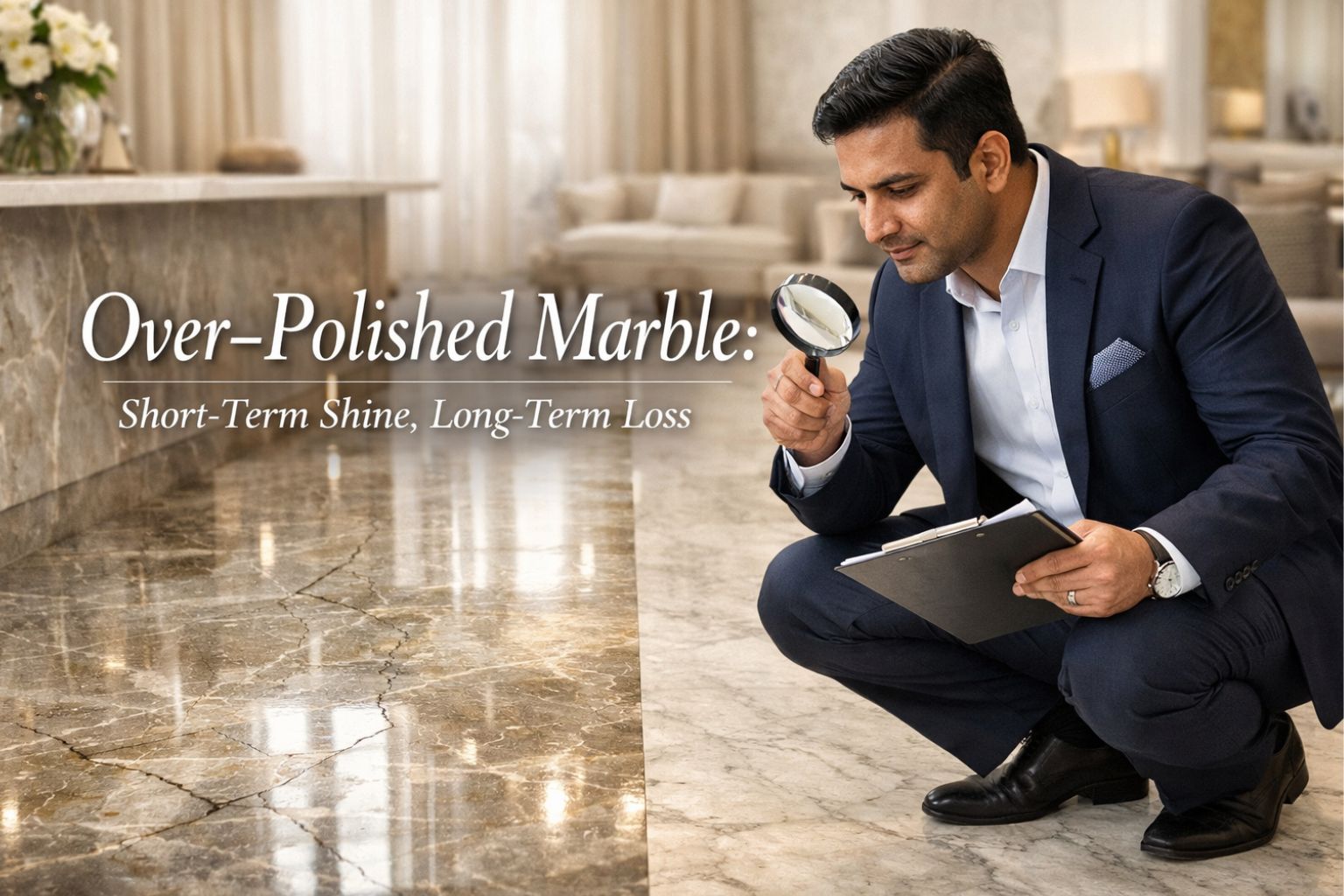
Even if your marble looks dazzling, it’s essential to recognize signs of over-polishing:
- A glossy surface that feels almost plastic-like
- Visible scratches or micro-cracks after light impact
- Uneven shine across different areas
- Marble that stains easily despite regular sealing
If you notice these signs, it’s crucial to consult a stone expert like Ankit Singhal for proper restoration and maintenance guidance.
Best Practices for Marble Polishing
Maintaining marble’s elegance without compromising its integrity involves careful, expert-led polishing. Here’s how:
1. Moderate Polishing
Polish marble only as needed. A moderate shine enhances beauty without thinning the surface.
2. Use Professional Equipment
Professional-grade polishing machines with controlled speed and pressure prevent over-polishing.
3. Choose the Right Polishing Products
Use neutral pH or mild stone-polishing agents. Avoid harsh acids or abrasive chemicals.
4. Seal Your Marble
Regular sealing protects marble from stains and wear. Sealants preserve the natural shine and minimize the need for frequent polishing.
5. Routine Maintenance
Clean spills immediately and use soft cloths or mops. Avoid acidic cleaners like vinegar or lemon juice, which can damage marble over time.
Ankit Singhal emphasizes: “Marble maintenance is about balance—preserving beauty without pushing the stone beyond its natural limits.”
Over-Polishing vs. Honed Marble Finish
Many designers now recommend honed marble finishes instead of high-gloss polishing. A honed finish:
- Provides a soft, matte look
- Maintains natural elegance
- Minimizes slippery surfaces
- Reduces visible scratches and wear
This approach focuses on long-term preservation rather than short-term aesthetics.
Case Study: Over-Polishing Consequences
Consider a recent project handled by Ankit Singhal:
A luxury hotel installed ultra-glossy Italian Carrara marble flooring in the lobby. Within six months:
- The shine faded unevenly
- Frequent polishing led to micro-cracks
- Maintenance costs skyrocketed
Ankit intervened with a professional restoration plan: the marble was honed, sealed, and maintained with proper cleaning routines. The result: sustainable elegance and reduced maintenance costs.
FAQs About Marble Polishing
Q1: How often should marble be polished?
A: Typically, marble requires polishing every 2–5 years, depending on traffic, wear, and exposure. Over-polishing is unnecessary and damaging.
Q2: Can over-polished marble be restored?
A: Yes, an expert can hone and reseal the surface, removing thin polished layers and restoring natural beauty.
Q3: Is glossy marble bad?
A: Not necessarily. Gloss is fine in moderation. The problem arises when shine is forced too frequently, creating structural damage.
Q4: Are honed finishes safer for homes?
A: Absolutely. Honed marble provides slip resistance and requires less maintenance than over-polished surfaces.
Q5: What cleaning methods are safe for marble?
A: Use soft cloths, neutral pH cleaners, and avoid acids, vinegar, or abrasive pads.
Conclusion: Preserve Beauty, Avoid Over-Polishing
Marble is more than a decorative surface; it’s an investment in elegance and longevity. Over-polishing may provide temporary shine, but it compromises the stone’s structural integrity, increases maintenance costs, and diminishes natural charm.
Following expert advice from Ankit Singhal ensures your marble remains luxurious and durable for decades. Moderate polishing, proper cleaning, and periodic sealing are the keys to preserving timeless elegance.
For in-depth knowledge about marble care, polishing, and industry secrets, explore our book: “The Secrets of Marble Industry” by Ankit Singhal.
Contact Us
📞 Phone: +91 92521 01111
📧 Email: ceo@shreeramexpo.in