
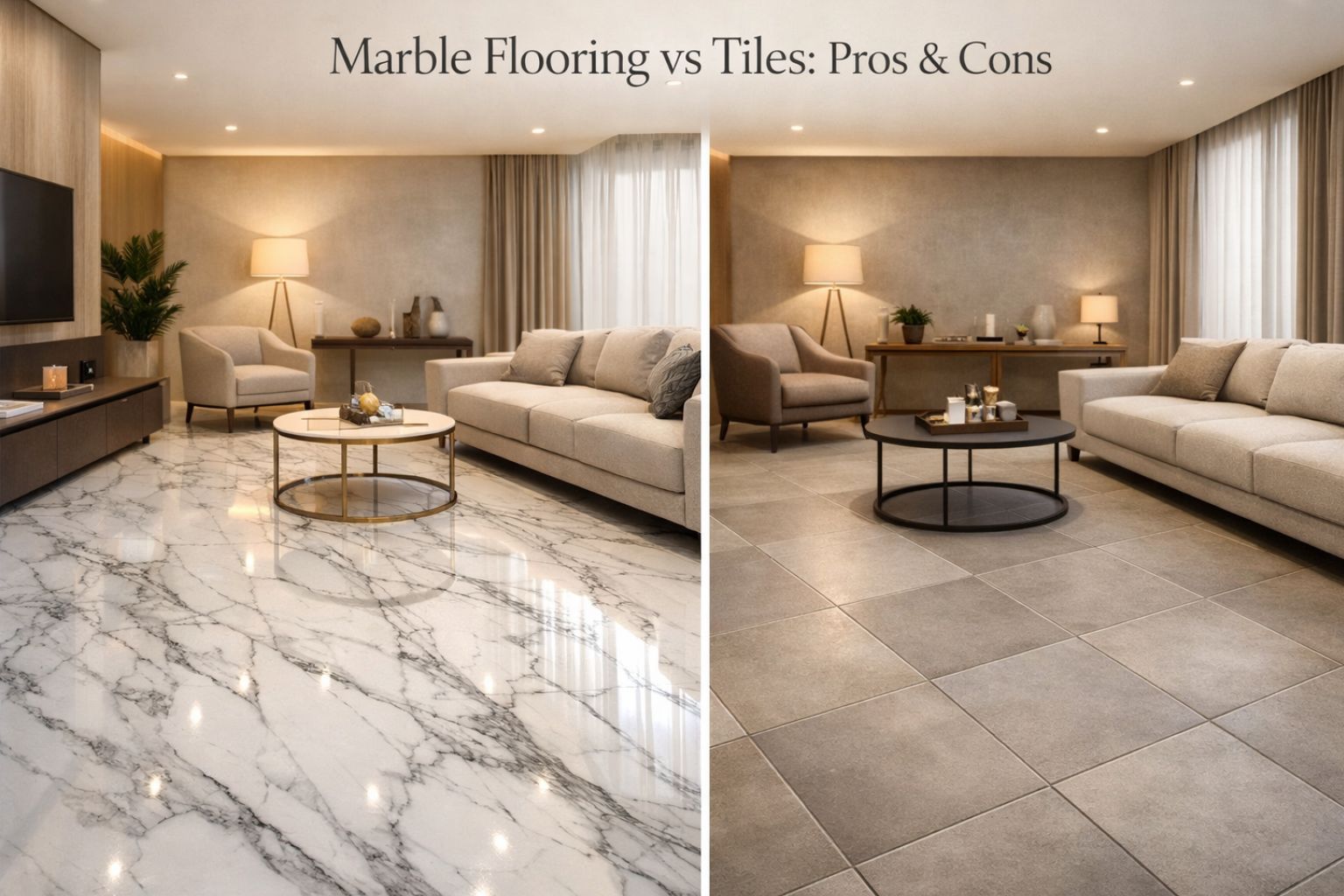
Choosing the right flooring is one of the most important decisions when designing or renovating a home or commercial space. Flooring impacts not just the look of your interiors, but also durability, comfort, maintenance, and long-term value. Two of the most popular options today are marble flooring and tiles.
As a stone expert, I, Ankit Singhal, have worked closely with architects, builders, and homeowners for years. In this detailed guide, I will walk you through a clear, honest comparison of marble flooring vs tiles, covering advantages, disadvantages, costs, maintenance, aesthetics, and ideal use cases—so you can make a confident, informed decision.
Understanding Marble Flooring
Marble is a natural stone formed over millions of years under heat and pressure. Each slab is unique, with natural veins, patterns, and color variations that cannot be replicated artificially.
Marble flooring has been used for centuries in palaces, temples, luxury homes, and iconic buildings. Even today, it remains a symbol of elegance, prestige, and timeless beauty.
Key Characteristics of Marble Flooring
- 100% natural stone
- Unique veining and patterns
- Cool surface, ideal for warm climates
- Available in polished, honed, and matte finishes
- Long lifespan when maintained properly
Understanding Tiles Flooring
Tiles are manufactured flooring materials, commonly made from ceramic, porcelain, or vitrified compounds. They are factory-produced, which allows for consistency in size, color, and design.
Modern tiles can mimic the look of marble, wood, concrete, or stone while offering practicality and affordability.
Key Characteristics of Tiles
- Man-made and uniform in appearance
- Wide range of designs and sizes
- Easier installation
- Resistant to stains and moisture
- Budget-friendly options available
Marble Flooring vs Tiles: Detailed Comparison
Let’s break down the comparison point by point.
1. Aesthetic Appeal
Marble Flooring
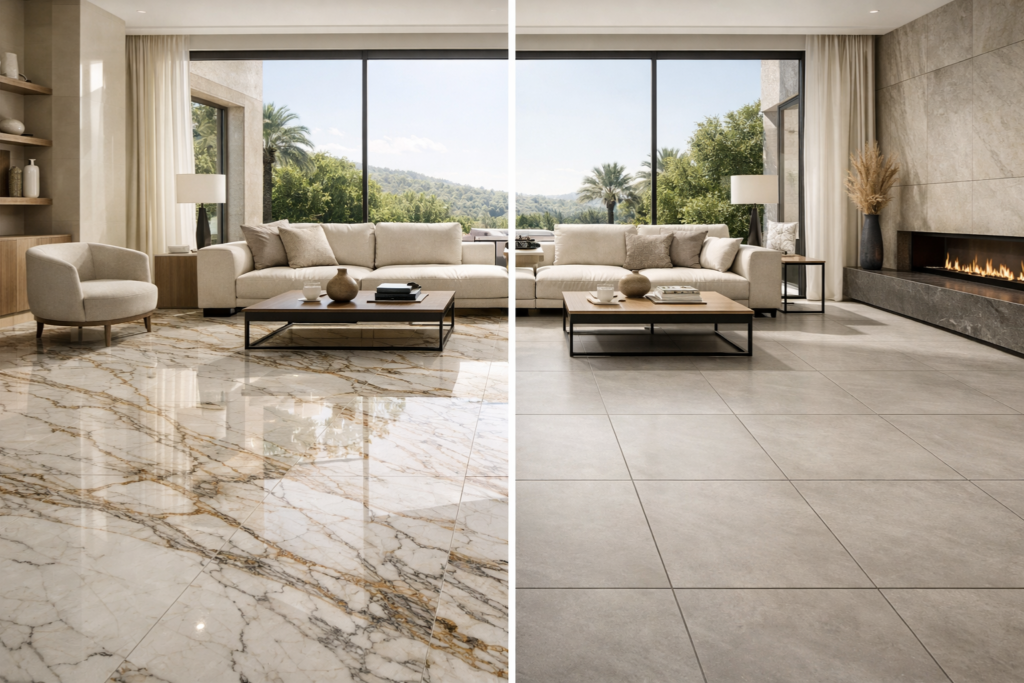
Marble offers unmatched natural beauty. No two marble floors look the same. The depth, veins, and subtle color variations create a luxurious and sophisticated atmosphere.
Ideal for:
- Luxury homes
- Villas and bungalows
- Hotels and premium commercial spaces
- Living rooms and master bedrooms
Tiles
Tiles offer consistency and variety. You can choose from thousands of designs, including marble-look tiles. However, the finish often lacks the depth and richness of natural stone.
Winner: Marble Flooring (for luxury and uniqueness)
2. Durability & Lifespan
Marble Flooring
Marble is extremely durable and can last 50–100 years or more if maintained properly. Old heritage buildings are proof of marble’s longevity.
However, marble is softer than granite and can scratch or etch if not cared for.
Tiles
Porcelain and vitrified tiles are hard, scratch-resistant, and suitable for heavy foot traffic. They typically last 20–30 years.
Winner: Marble for lifespan, Tiles for scratch resistance
3. Maintenance & Care
Marble Flooring
Marble requires regular care:
- Periodic polishing
- Sealing to prevent stains
- Gentle cleaners only
Spills should be wiped immediately to avoid etching.
Tiles
Tiles are low-maintenance:
- Easy cleaning with regular detergents
- No sealing required
- Highly stain-resistant
Winner: Tiles (for easy maintenance)
Cost Comparison
Marble Flooring Cost
- Higher initial material cost
- Installation requires skilled labor
- Long-term investment due to durability
Tiles Cost
- Wide price range
- Affordable installation
- Budget-friendly for large areas
Winner: Tiles (for upfront affordability)
5. Comfort & Climate Suitability
Marble Flooring
Marble stays naturally cool, making it ideal for Indian weather conditions. It enhances comfort during hot summers.
Tiles
Tiles can feel neutral or slightly warm, depending on material and finish.
Winner: Marble Flooring (especially in warm regions)
6. Repair & Replacement
Marble Flooring
If damaged, matching the exact marble slab can be challenging due to natural variations. However, polishing can restore most wear.
Tiles
Damaged tiles are easier to replace, provided extra stock is available.
Winner: Tiles
7. Property Value Impact
Marble flooring significantly increases property value and resale appeal. It is considered a premium feature.
Tiles add functionality but do not offer the same luxury perception.
Winner: Marble Flooring
Pros & Cons Summary
Marble Flooring – Pros
- Timeless luxury and elegance
- Long lifespan
- Natural cooling effect
- Enhances property valueMarble Flooring – Cons
- Higher cost
- Requires regular maintenance
- Sensitive to acids and scratches
Tiles – Pros
- Affordable options
- Easy maintenance
- Scratch and stain resistant
- Wide design variety
Tiles – Cons
- Less natural appeal
- Shorter lifespan
- Repetitive patterns
Which Flooring Should You Choose?
Choose marble flooring if:
- You value luxury and natural beauty
- You want long-term investment
- You are ready for proper maintenance
Choose tiles if:
- You are working within a budget
- You prefer low maintenance
- You need quick installation
As a stone expert, my recommendation is simple: marble for elegance and legacy, tiles for convenience and cost-efficiency.
Expert Insight from Ankit Singhal
Over the years, I have seen trends come and go, but marble has never lost its charm. If selected carefully and maintained properly, marble flooring becomes more beautiful with time—something very few materials can achieve.
For a deeper understanding of natural stone, sourcing, and long-term care, I recommend exploring our book:
THE SECRETS OF MARBLE INDUSTRY
FAQs: Marble Flooring vs Tiles
1. Is marble flooring better than tiles?
Marble offers superior aesthetics and longevity, while tiles are easier to maintain and more affordable. The better choice depends on your priorities.
2. Does marble flooring crack easily?
No, when installed correctly on a strong base, marble is very durable.
3. Are tiles suitable for luxury homes?
Yes, but they do not provide the same natural elegance as marble.
4. Is marble flooring expensive to maintain?
Maintenance costs are moderate if cleaning and polishing are done regularly.
5. Can marble be used in kitchens?
Yes, but it requires sealing and careful use to avoid stains.
Contact Us
If you need expert guidance on choosing the right marble or flooring solution, feel free to connect:
Phone: +91 92521 01111
Email: ceo@shreeramexpo.in
Get expert advice directly from industry professionals and make a flooring choice you will be proud of for decades to come.