
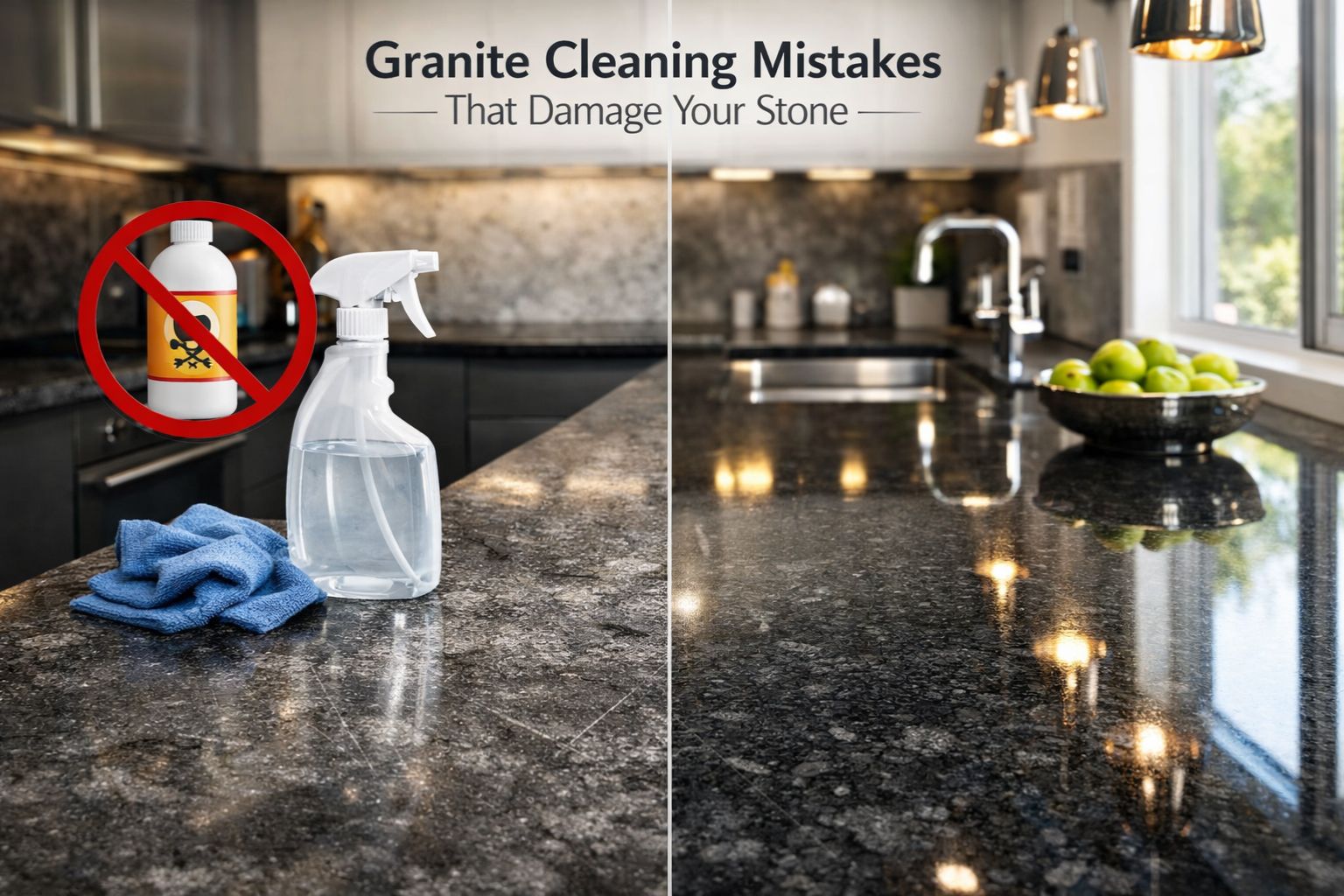
Granite Cleaning Mistakes That Damage Your Stone – Expert Guide by Ankit Singhal
Granite is one of the strongest and most luxurious natural stones used in homes and commercial spaces. From kitchen countertops and flooring to staircases and wall cladding, granite adds elegance, durability, and long-lasting value.
However, despite its strength, granite is not indestructible.
Many homeowners unknowingly damage their granite surfaces by using the wrong cleaning products or following incorrect maintenance practices. Over time, these small mistakes can dull the shine, cause stains, weaken sealants, and even create permanent surface damage.
In this detailed guide, stone expert Ankit Singhal shares the most common granite cleaning mistakes that damage your stone — and how to avoid them.
Why Proper Granite Care Matters
Granite is a natural stone formed under extreme heat and pressure. It is dense and durable, but it still has microscopic pores. These pores can absorb liquids, chemicals, and dirt if the surface is not properly sealed or maintained.
Improper cleaning can lead to:
- Loss of polish and shine
- Surface etching or dull spots
- Permanent staining
- Sealant breakdown
- Micro-cracks over time
If you’ve invested in premium granite, maintaining it correctly ensures it stays beautiful for decades.
1. Using Harsh Chemical Cleaners
One of the biggest mistakes homeowners make is using strong chemical cleaners.
Avoid:
- Bathroom cleaners
- Bleach
- Ammonia
- Glass cleaners
- Acid-based cleaners
- Tile cleaners
These products may look effective, but they slowly break down the protective sealant on granite. Once the sealant weakens, the stone becomes vulnerable to stains and moisture absorption.
What to Use Instead:
- pH-neutral stone cleaner
- Mild dish soap diluted in water
- Soft microfiber cloth
Expert Tip from Ankit Singhal:
“Granite does not need aggressive chemicals. Gentle cleaning preserves both shine and strength.”
2. Using Vinegar or Lemon for Cleaning
Many people believe natural cleaners like vinegar and lemon are safe. This is a myth.
Vinegar, lemon, and other acidic substances can damage granite surfaces. While granite is more resistant than marble, repeated exposure to acids can dull the finish and weaken sealants.
Why It’s Harmful:
- Acid breaks down sealant
- Surface loses polish
- Stone becomes more porous
Avoid DIY internet hacks that recommend vinegar-based cleaning solutions.
3. Scrubbing with Rough Pads or Steel Wool
Granite surfaces may look tough, but abrasive scrubbing tools can scratch the polish.
Never Use:
- Steel wool
- Metal scrubbers
- Hard scouring pads
- Rough brushes
Even small scratches can make granite look worn over time.
Use Instead:
- Soft sponge
- Microfiber cloth
- Soft cleaning towel
Gentle cleaning protects the polished finish.
4. Not Cleaning Spills Immediately
Granite is stain-resistant — not stain-proof.
Common staining agents include:
- Oil
- Wine
- Coffee
- Turmeric
- Tomato sauce
- Ink
If spills sit for too long, they penetrate the pores and leave dark patches.
What To Do:
- Wipe spills immediately
- Clean with mild soap
- Dry the surface after cleaning
Quick action prevents permanent damage.
5. Ignoring Granite Sealing
Sealing is essential for granite maintenance.
Over time, the protective sealant layer wears off. Without sealing, granite absorbs liquids more easily.
How to Check If Sealing Is Needed:
Put a few drops of water on the surface.
If water absorbs within 5–10 minutes, resealing is required.
Recommended Frequency:
- Kitchen countertops: Every 1–2 years
- Flooring: Every 2–3 years
Expert Advice:
“Sealing granite is like insurance for your stone. It protects your investment.”
6. Using Excessive Water
While water seems harmless, excessive moisture can seep into joints and edges.
Problems caused by too much water:
- Weakening of adhesive
- Mold growth under countertops
- Damage to wooden cabinets below
Always wipe the surface dry after cleaning.
7. Placing Hot Utensils Directly on Granite
Granite is heat resistant, but extreme temperature changes can cause cracks.
Repeated exposure to very hot pans may:
- Damage sealant
- Create thermal shock cracks
- Reduce shine
Always use:
- Trivets
- Heat pads
- Stands
This small habit protects your stone long term.
8. Using Generic Floor Cleaners on Granite Flooring
Most floor cleaners contain chemicals not suitable for natural stone.
Using regular tile cleaners on granite floors can:
- Dull shine
- Leave residue
- Cause slippery surfaces
Instead, use:
- Stone-specific floor cleaner
- Neutral cleaning solution
9. Dragging Heavy Furniture
Dragging sofas, tables, or appliances across granite floors causes scratches and cracks.
Always:
- Lift furniture
- Use furniture pads
- Place protective mats
Granite flooring can last decades if protected properly.
10. Polishing with Random Market Products
Many “granite polish sprays” available in the market contain wax or silicone.
These products:
- Build artificial layers
- Attract dust
- Make surfaces sticky
- Dull natural shine over time
Professional stone polishing is recommended instead of temporary shine enhancers.
11. Skipping Professional Maintenance
Even with good daily care, granite benefits from professional inspection.
A stone expert can:
- Deep clean
- Re-polish
- Reseal properly
- Repair minor damage
Regular professional care extends granite life significantly.
Daily Granite Cleaning Routine (Recommended by Ankit Singhal)
Here is a simple daily maintenance routine:
- Dust surface with dry microfiber cloth
- Clean with diluted mild soap
- Wipe with clean water
- Dry completely
- Avoid chemical sprays
Weekly:
- Use stone-safe cleaner
Yearly:
- Check sealant
Consistency keeps granite looking new.
Signs Your Granite Is Getting Damaged
Watch for these warning signs:
- Dull patches
- Water absorption marks
- Oil stains
- Small cracks
- Rough texture
If you notice any of these, consult a stone expert immediately.
Granite Care for Commercial Spaces
Hotels, offices, and showrooms with granite flooring require extra care.
Recommended practices:
- Daily dry mopping
- Weekly neutral cleaning
- Scheduled professional polishing
- Avoid harsh disinfectants
Heavy foot traffic demands stronger maintenance planning.
Long-Term Benefits of Proper Granite Maintenance
When maintained properly, granite offers:
- 25+ years durability
- Scratch resistance
- Heat resistance
- Increased property value
- Luxurious aesthetics
Proper cleaning prevents expensive repairs.
Frequently Asked Questions (FAQs)
1. Can I use dish soap daily on granite?
Yes, mild dish soap diluted in water is safe for daily cleaning.
2. Is granite completely stain-proof?
No. Granite is stain-resistant but can stain if spills are not cleaned quickly.
3. How often should granite be sealed?
Typically every 1–2 years depending on usage.
4. Can I use vinegar occasionally?
No. Even occasional use can weaken the sealant.
5. Why does my granite look dull?
Possible reasons include worn sealant, chemical damage, or residue buildup.
6. Can scratches be repaired?
Minor scratches can be polished professionally.
7. Is steam cleaning safe for granite?
Not recommended, as heat and moisture may weaken sealant.
Final Words from Stone Expert Ankit Singhal
Granite is a premium natural stone that deserves proper care. Most damage happens not because granite is weak — but because of incorrect cleaning methods.
Avoid harsh chemicals.
Seal regularly.
Clean gently.
Act quickly on spills.
Small daily habits make a big difference.
If you need expert advice on granite selection, maintenance, or restoration, feel free to connect.
Contact Us
📞 Call / WhatsApp: +91 92521 01111
📧 Email: ceo@shreeramexpo.in
Our Book
If you want to understand the stone industry deeply and learn professional insights, read:
THE SECRETS OF MARBLE INDUSTRY
A complete guide to marble and granite selection, sourcing, quality checking, and industry knowledge.