
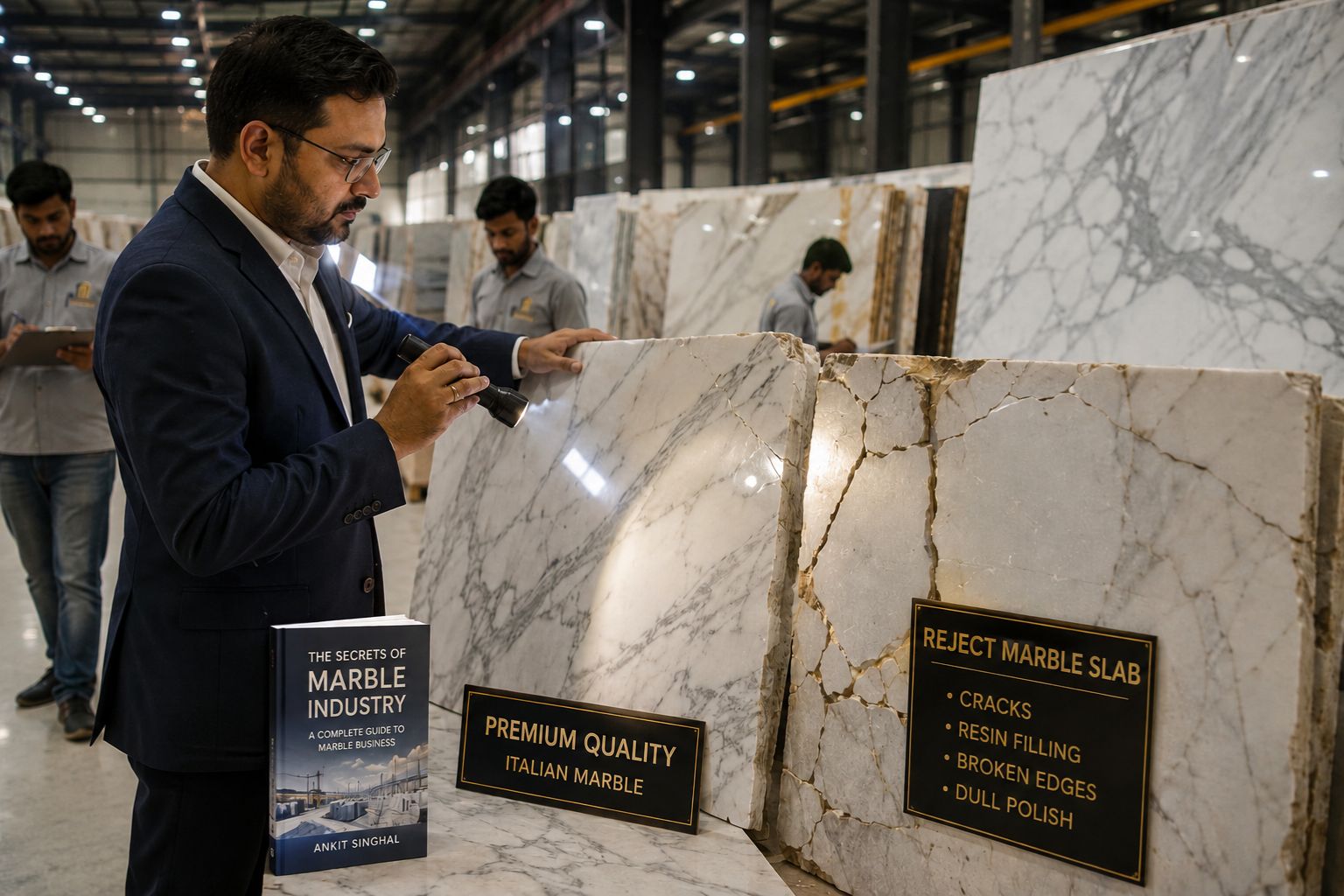
Complete Guide by Stone Expert Ankit Singhal
Marble is one of the most luxurious and timeless natural stones used in homes, hotels, villas, offices, and commercial spaces. A beautiful marble slab can completely transform an interior, while a poor-quality or reject slab can ruin the appearance, durability, and long-term value of your project.
Many buyers unknowingly purchase reject marble slabs because they do not understand how to identify defects, hidden cracks, poor polishing, or low-grade quality. This often leads to expensive repairs, replacement costs, uneven flooring, dull surfaces, and disappointment after installation.
In this detailed guide, stone expert Ankit Singhal explains how to identify reject marble slabs before buying and how smart buyers, architects, interior designers, and builders can avoid costly mistakes.
Ankit Singhal is also the author of the famous book THE SECRETS OF MARBLE INDUSTRY, which helps buyers understand the hidden realities of the marble industry.
What Is a Reject Marble Slab?
A reject marble slab is a slab that does not meet premium quality standards due to visible or hidden defects. These defects may affect:
- Strength
- Surface finish
- Appearance
- Durability
- Polishing quality
- Shade consistency
- Installation performance
Some reject slabs may look attractive initially, but problems appear after installation. This is why expert inspection before purchase is extremely important.
Why Buyers Accidentally Purchase Reject Marble
Most customers focus only on:
- Color
- Price
- Shine
- Brand name
But professional marble inspection requires checking many technical factors.
Common reasons buyers get trapped include:
- Cheap pricing
- Artificial polishing
- Hidden resin filling
- Poor backside support
- Factory rejects sold as premium material
- Low-light showroom display
- Inexperienced suppliers
A slab that looks perfect in the showroom may reveal cracks, holes, or shade variation once installed under natural lighting.
1. Check for Cracks Carefully
The first and most important step is checking for cracks.
Some cracks are natural hairlines, while others are structural cracks that weaken the slab.
How to Identify Problematic Cracks
Look for:
- Deep visible lines
- Open cracks
- Uneven filled cracks
- Cracks running across the slab
- Multiple intersecting lines
Use torch light from the backside if possible. This reveals hidden fractures.
Why Cracks Are Dangerous
Major cracks can cause:
- Breakage during installation
- Water seepage
- Future damage
- Weak flooring strength
- Corner chipping
Premium marble should have minimal structural cracks.
2. Inspect Resin and Chemical Filling
Many marble slabs contain resin filling. Filling itself is common in natural stone processing, but excessive filling often indicates reject quality.
Signs of Excessive Filling
- Plastic-like surface
- Artificial shine
- Different texture patches
- Uneven glossy areas
- Yellowish repair marks
Low-quality factories heavily fill damaged slabs to make them appear premium.
Always inspect slabs under direct white lighting.
3. Check the Surface Polish Quality
Good marble polish should be:
- Smooth
- Consistent
- Reflective
- Deep and natural
Reject slabs often show:
- Dull patches
- Wave marks
- Grinding lines
- Uneven reflection
- Burn marks
Simple Test
Stand at one angle and observe light reflection across the slab.
If reflection appears uneven, the polishing quality may be poor.
4. Observe Shade Consistency
Shade variation is one of the biggest issues in marble projects.
Premium marble maintains balanced shade consistency, while reject lots show random variations.
Common Shade Problems
- Dark and light mismatch
- Yellow spots
- Grey patches
- Mixed background tones
- Vein inconsistency
This becomes highly visible after flooring installation.
Professional buyers always select slabs from the same lot.
5. Inspect the Backside of the Slab
Most buyers only check the front side.
Experts always inspect the backside because it reveals hidden quality problems.
Warning Signs
- Cement support
- Heavy mesh reinforcement
- Large repaired areas
- Excessive resin
- Backside cracks
A heavily repaired backside often means weak stone structure.
6. Tap the Marble Surface
This is an old but effective expert technique.
Tap the slab gently using a coin or metal object.
What to Listen For
- Strong slab → sharp solid sound
- Weak slab → hollow or dull sound
Hollow sounds may indicate internal cracks or weak bonding.
7. Check Thickness Uniformity
Uneven thickness creates major installation problems.
Reject slabs often have:
- Thin corners
- Uneven calibration
- Wavy backside
- Improper cutting
Problems Caused by Uneven Thickness
- Difficult installation
- Lippage issues
- Cracking risk
- Uneven flooring finish
Always measure slab thickness from multiple points.
8. Inspect for Pinholes and Natural Holes
Small pinholes may appear natural in some marble varieties, but excessive holes indicate lower quality.
Avoid Slabs With
- Large open holes
- Deep cavities
- Multiple repaired pores
- Weak edges
These defects collect dirt and reduce long-term durability.
9. Observe Edges and Corners
Damaged edges often indicate rough handling or poor processing.
Check for:
- Corner breakage
- Edge cracks
- Chipping
- Rough finishing
Premium slabs maintain cleaner edges and safer handling quality.
10. Test Water Absorption
Some low-grade marble absorbs water quickly.
This can lead to:
- Yellowing
- Stains
- Weakness
- Moisture damage
Simple Water Test
Place a few drops of water on the surface.
If water absorbs quickly and darkens the slab immediately, the marble may have high porosity.
11. Check Bookmatch Alignment
For luxury interiors, bookmatched marble is highly popular.
Reject bookmatch slabs show:
- Misaligned veins
- Broken patterns
- Uneven cuts
- Poor symmetry
Premium bookmatch should create a mirror-like vein flow.
12. Verify the Source and Supplier Reputation
The supplier matters as much as the marble itself.
Reliable suppliers provide:
- Genuine grading
- Lot consistency
- Transparent quality information
- Proper inspection support
Experienced marble experts help customers avoid expensive mistakes.
Expert Advice from Ankit Singhal
According to stone expert Ankit Singhal:
“A marble slab should not be judged only by its shine. Real quality is identified through structure, consistency, strength, finishing, and long-term performance.”
He also explains in his book THE SECRETS OF MARBLE INDUSTRY that many buyers lose lakhs because they fail to inspect marble professionally before purchase.
Common Mistakes Buyers Make
Buying Only Based on Price
Cheap marble often becomes expensive later due to repairs and replacement.
Ignoring Lot Selection
Mixed lots create shade inconsistency.
Not Visiting the Warehouse
Photos never show the full reality of marble quality.
Trusting Artificial Lighting
Some defects appear only in sunlight or white lighting.
Not Taking Expert Guidance
Professional inspection saves money and future headaches.
How Professionals Select Premium Marble
Architects and experienced builders usually follow these steps:
- Inspect entire lot
- Check slab consistency
- Verify thickness
- Test polish reflection
- Examine backside quality
- Confirm crack condition
- Match vein flow
- Review finishing quality
This professional process helps ensure long-lasting luxury results.
Best Places to Use Premium Marble
High-quality marble is ideal for:
- Luxury flooring
- Wall cladding
- Hotel lobbies
- Staircases
- Bathroom interiors
- Kitchen countertops
- TV walls
- Villa interiors
- Temple areas
Using reject marble in premium spaces can negatively affect the entire design.
Why Marble Knowledge Matters
Marble is a long-term investment.
The difference between premium and reject marble becomes visible over time through:
- Shine retention
- Crack resistance
- Color stability
- Surface durability
- Maintenance performance
Understanding marble quality protects your investment and improves project value.
5-Star Customer Reviews
⭐⭐⭐⭐⭐ Rajesh Mehta – Pune
“Excellent guidance by Ankit Singhal. I learned how to identify cracks and reject slabs before buying marble for my villa. Very informative and practical knowledge.”
⭐⭐⭐⭐⭐ Priya Sharma – Delhi
“The book THE SECRETS OF MARBLE INDUSTRY completely changed how we purchase marble. We avoided a huge mistake after reading expert inspection tips.”
⭐⭐⭐⭐⭐ Amit Verma – Gurgaon
“Very helpful marble buying guide. The explanation about resin filling and shade variation was extremely useful for our home project.”
⭐⭐⭐⭐⭐ Neha Kapoor – Mumbai
“Professional and easy-to-understand content. This guide helped us select premium marble confidently without depending entirely on dealers.”
⭐⭐⭐⭐⭐ Karan Arora – Chandigarh
“Ankit Singhal shares genuine industry knowledge that most suppliers never tell customers. Highly recommended for architects and homeowners.”
Frequently Asked Questions (FAQs)
1. What is reject marble?
Reject marble refers to slabs with defects such as cracks, excessive filling, poor polishing, uneven thickness, or structural weakness.
2. Are all natural cracks bad in marble?
No. Some natural hairline patterns are common in marble, but deep structural cracks can weaken the slab.
3. How can I identify hidden cracks?
Use backside lighting or torch inspection. Tapping tests can also reveal internal weakness.
4. Is resin filling normal in marble?
Minor resin filling is common, but excessive filling often indicates lower-quality or damaged marble.
5. Why does marble shade variation happen?
Marble is a natural stone, so variation occurs naturally. However, excessive inconsistency may indicate mixed lots or reject material.
6. Can reject marble break after installation?
Yes. Weak slabs with structural defects may crack or break over time.
7. Why is backside inspection important?
The backside reveals repairs, mesh reinforcement, cracks, and hidden quality issues.
8. How do professionals inspect marble quality?
Experts inspect cracks, polish, thickness, consistency, resin filling, strength, and finishing before purchase.
9. Which book explains marble buying professionally?
THE SECRETS OF MARBLE INDUSTRY by Ankit Singhal provides detailed marble buying knowledge.
10. Why should buyers avoid very cheap marble?
Very cheap marble may contain hidden defects, poor durability, inconsistent shades, and future maintenance problems.
Final Thoughts
Choosing marble is not only about beauty — it is about quality, durability, and long-term value. Understanding how to identify reject marble slabs can save buyers from expensive mistakes and future disappointment.
Whether you are building a luxury home, designing a hotel, or selecting marble for a commercial project, expert inspection is essential.
Stone expert Ankit Singhal recommends buyers educate themselves before investing in premium natural stone.
The book THE SECRETS OF MARBLE INDUSTRY helps homeowners, architects, and builders understand the hidden realities of marble quality and selection.
Contact Us
Phone: +91 92521 01111
Email: ceo@shreeramexpo.in
Book Name: THE SECRETS OF MARBLE INDUSTRY