An Expert Guide by Stone Specialist Ankit Singhal
Choosing the right stone for a bathroom is not just a design decision—it is a daily comfort decision. Many homeowners invest heavily in beautiful stone surfaces, only to realize later that the wrong stone in the bathroom creates constant problems like slipping, stains, dullness, and high maintenance.
As a stone expert with years of hands-on industry experience, I have seen how one wrong choice can turn a luxury bathroom into a daily headache. This detailed guide explains why stone selection matters, what mistakes to avoid, and how to choose the perfect bathroom stone that stays beautiful for years.
Why Bathroom Stone Selection Is More Important Than You Think
Bathrooms are high-moisture, high-usage areas. Unlike living rooms or bedrooms, bathroom stone faces:
- Continuous water exposure
- Soap and chemical contact
- Steam and humidity
- Barefoot movement
- Temperature variations
If the stone is not suitable for these conditions, it begins to fail—sometimes within months.
Daily Problems Caused by Using the Wrong Stone in Bathrooms
1. Slippery Floors That Increase Accident Risk
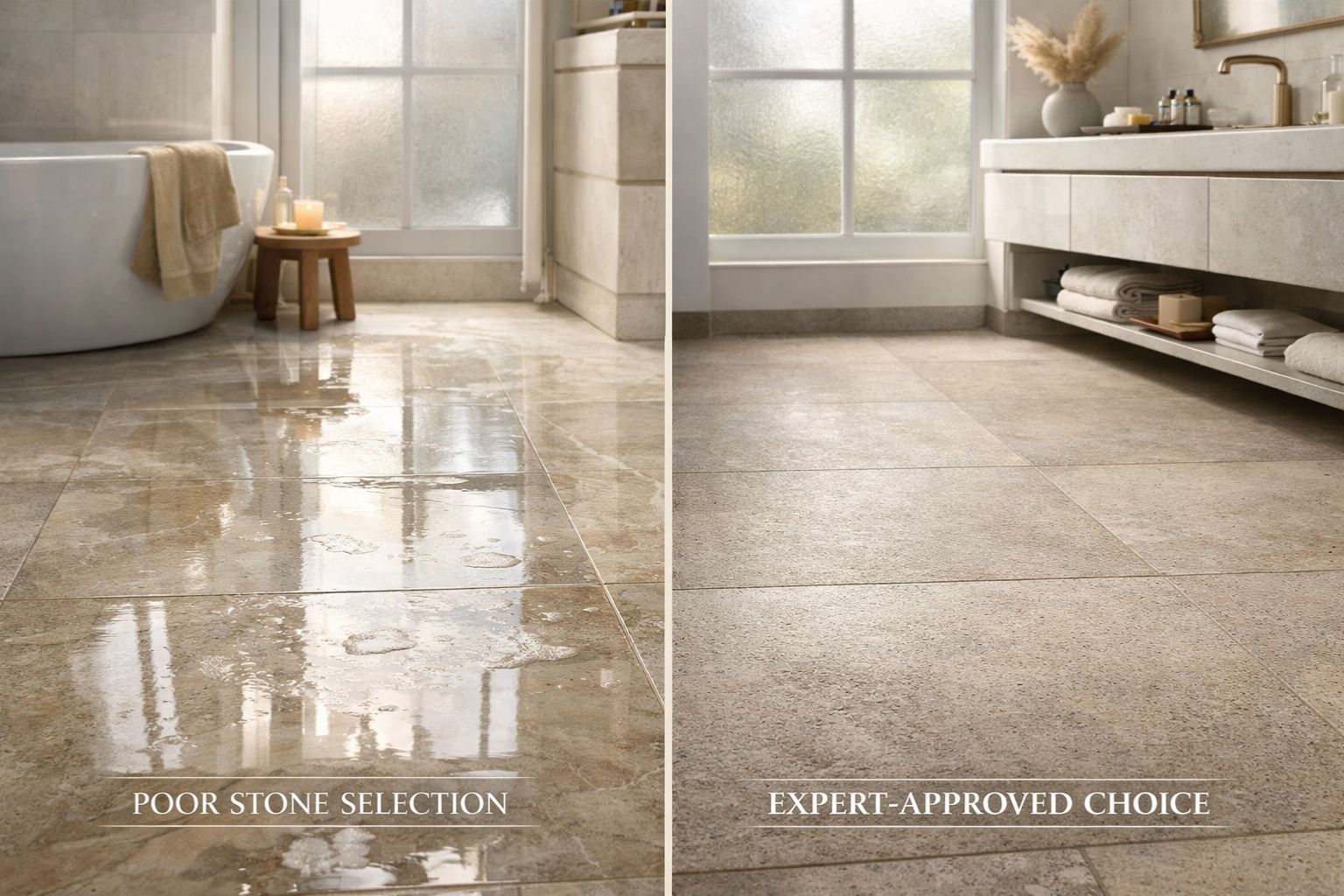
Highly polished stones may look luxurious, but in wet bathrooms they can become dangerously slippery. This is one of the most common mistakes homeowners make.
Daily impact:
- Risk of slipping for children and elderly
- Stress instead of relaxation
- Need for rugs that ruin aesthetics
2. Water Stains That Never Go Away
Some stones are naturally porous. When used in bathrooms without proper treatment, they absorb water, leaving:
- White patches
- Dark water marks
- Uneven surface color
Once absorbed, these stains are extremely difficult to remove.
3. Yellowing and Discoloration Over Time
Certain white or light stones react badly with:
- Hard water
- Soap residue
- Shampoo chemicals
This leads to permanent yellowing, making the bathroom look old and unhygienic even when clean.
4. Stone Surface Losing Shine Quickly
Bathrooms expose stone to constant cleaning. If the stone is soft or unsuitable, frequent washing causes:
- Loss of polish
- Dull appearance
- Patchy shine
The stone may look worn out within a year.
5. Mold and Fungal Growth in Stone Pores
Porous stones trap moisture. Over time, this creates an ideal environment for:
- Fungus
- Black patches
- Unpleasant smell
This is not only unattractive but also unhygienic.
6. High Maintenance and Cleaning Stress
Some stones require:
- Special cleaners
- Frequent sealing
- Professional polishing
For a daily-use bathroom, this becomes frustrating and expensive.
Common Stone Mistakes People Make in Bathrooms
Choosing Stone Only for Looks
Many buyers select stone based on:
- Showroom shine
- Instagram photos
- Living room samples
Bathrooms need technical suitability, not just beauty.
Ignoring Water Absorption Levels
Water absorption is one of the most critical factors for bathroom stone—but is rarely discussed during purchase.
Using Polished Stone Everywhere
A polished finish may work for walls but is often unsafe for floors.
Skipping Professional Guidance
Stone selection without expert advice often leads to irreversible mistakes.
How to Choose the Right Stone for Bathrooms (Expert Checklist)
1. Low Water Absorption
Always choose stone with low porosity to prevent staining and moisture damage.
2. Anti-Skid or Honed Finish for Floors
Bathroom floors should have:
- Honed
- Leather
- Anti-skid finishes
These reduce slipping while maintaining elegance.
3. Chemical Resistance
Bathroom stones must resist:
- Soap
- Shampoo
- Cleaners
- Hard water minerals
4. Consistent Color and Density
High-quality stone has uniform density, which ensures:
- Even wear
- Long-term durability
- Stable appearance
5. Correct Placement Matters
Even the best stone fails if used in the wrong area:
- Floors
- Shower walls
- Vanity tops
Each area needs a different approach.
Best Stone Applications for Bathrooms
Bathroom Floors
- Choose textured or honed surfaces
- Avoid mirror-polished stones
Shower Walls
- Use low-absorption, sealed stone
- Avoid highly porous materials
Vanity Countertops
- Choose stain-resistant, dense stone
- Regular sealing is essential
Natural Stone vs Artificial Surfaces in Bathrooms
Natural Stone
Pros:
- Timeless beauty
- Natural patterns
- Long lifespan if chosen correctly
Cons:
- Needs expert selection
- Requires sealing
Artificial Materials
Pros:
- Uniform look
- Lower maintenance
Cons:
- Lacks natural depth
- Limited lifespan compared to stone
Real-Life Bathroom Stone Failures I Have Seen
- White floors turning yellow in six months
- Slabs cracking due to moisture absorption
- Expensive bathrooms looking dull after one year
- Homeowners replacing stone twice within five years
All these problems trace back to wrong stone selection.
How Proper Stone Selection Saves Money Long-Term
Choosing the right bathroom stone:
- Reduces maintenance cost
- Prevents replacement expenses
- Maintains property value
- Ensures daily comfort
A slightly higher initial investment saves lakhs over time.
Expert Advice from Ankit Singhal
“Bathrooms demand stone that works silently in the background—safe, durable, and stress-free. Beauty should never come at the cost of daily discomfort.”
This principle has guided my recommendations across residential and commercial projects.
Book Recommendation for Serious Buyers
For anyone deeply interested in understanding stone quality, sourcing, and long-term performance, my book:
📘 THE SECRETS OF MARBLE INDUSTRY
offers practical insights that buyers, architects, and builders rarely get access to.
Frequently Asked Questions (FAQs)
Q1. Can marble be used in bathrooms?
Yes, but only specific types, correct finishes, and proper sealing. Wrong marble selection leads to stains and slipping.
Q2. Is polished stone safe for bathroom floors?
No. Polished surfaces are slippery when wet. Always choose honed or anti-skid finishes.
Q3. How often should bathroom stone be sealed?
Typically once every 12–18 months, depending on stone type and usage.
Q4. Why does my bathroom stone look dull?
This is usually due to chemical reactions, wrong cleaning agents, or unsuitable stone quality.
Q5. Can damaged bathroom stone be fixed?
Minor issues can be treated, but severe water absorption or discoloration often requires replacement.
Final Thoughts: Choose Stone That Works for You, Not Against You
A bathroom should be a place of comfort, not daily frustration. The wrong stone creates silent problems that grow over time—slipping, stains, odor, and constant maintenance.
With expert guidance and informed selection, your bathroom stone can remain safe, elegant, and timeless for decades.
Contact for Expert Guidance
📞 Phone / WhatsApp: +91 92521 01111
📧 Email: ceo@shreeramexpo.in
Get professional advice before choosing stone—because fixing mistakes later costs far more.