
Marble is one of the most luxurious and timeless natural stones used in homes, offices, and commercial spaces. From elegant flooring to stunning countertops, marble adds unmatched beauty and value. However, the market today is flooded with marble from various sources, and not all marble is authentic. Knowing how to verify marble origin is crucial to ensure quality, durability, and investment value.
In this guide, stone expert Ankit Singhal, author of The Secrets of Marble Industry, shares step-by-step tips to verify marble origin before making a purchase.
Why Verifying Marble Origin Matters
Before we dive into the methods, it’s important to understand why marble origin verification is essential:
- Quality Assurance – Genuine marble from reputed sources ensures durability, minimal maintenance, and color consistency.
- Authenticity – Many sellers mix or substitute cheaper stones. Verifying origin prevents fraud.
- Investment Value – High-quality imported marble can significantly increase property value.
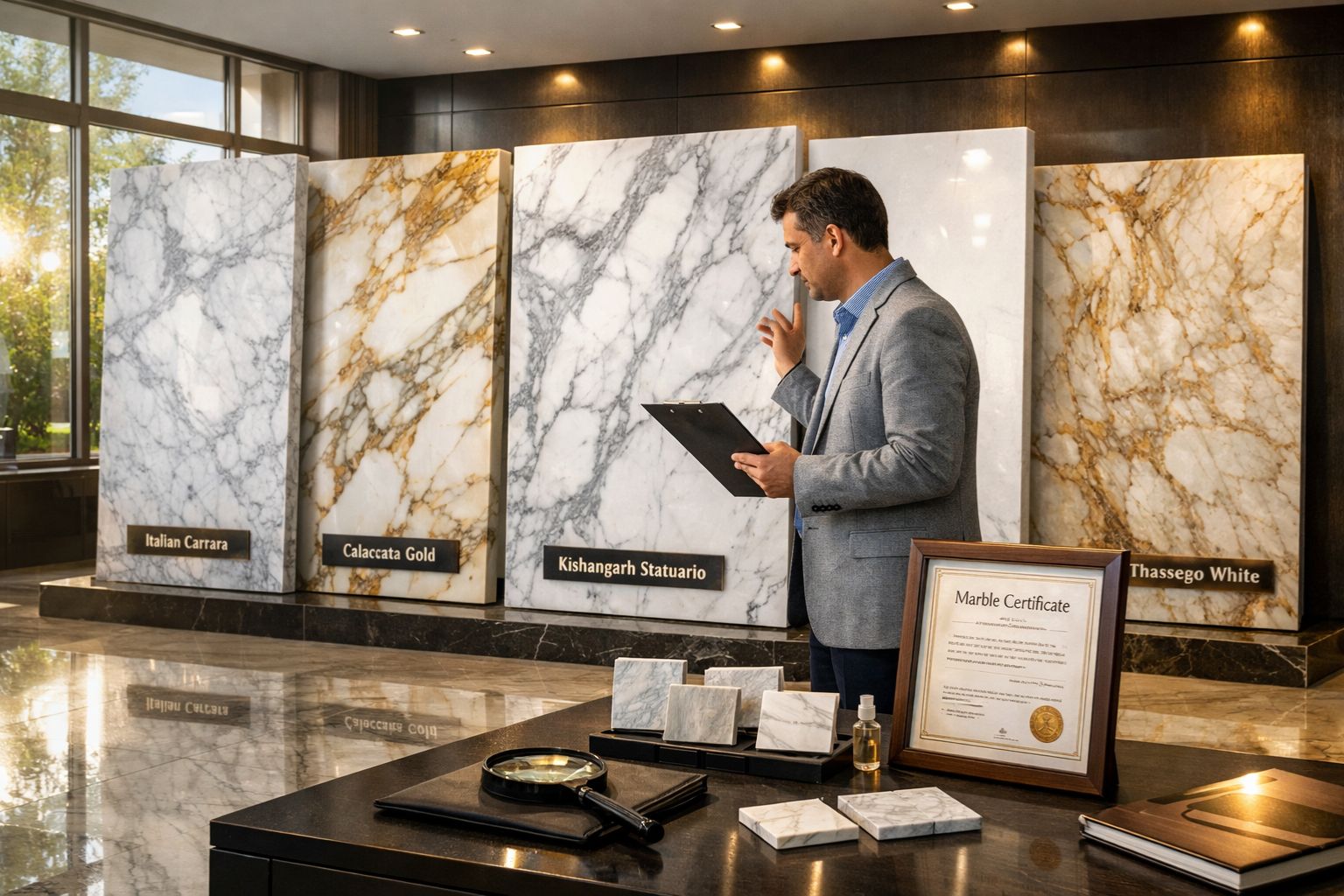
- Aesthetic Appeal – Different origins produce unique patterns and shades. For example, Italian Carrara marble has a soft white background with fine gray veins, while Kishangarh’s Statuario marble is known for its luxurious white base and elegant veins.
- Sustainability & Ethics – Knowing the origin helps ensure responsible sourcing.
1. Check the Marble Certificate
The first and most reliable method is to request a marble certificate or mill certificate from the supplier.
What it includes:
- Quarry location
- Type and grade of marble
- Test reports on strength, water absorption, and porosity
Tips:
- Always verify that the certificate is official and not self-issued by small vendors.
- Compare the certificate details with international marble standards.
Example: Shree Ram Stones in Kishangarh provides certificates for imported and domestic marbles, including Statuario, Michelangelo, Thassos White, and Volakas.
2. Observe the Color & Veining Pattern
Each marble origin has distinctive color and veining patterns:
- Italian Carrara Marble: White base with soft gray veins.
- Calacatta Gold Marble: Creamy white with bold golden veins.
- Thassos White Marble (Greece): Pure bright white with minimal veining.
- Statuario Marble: Luxurious white with natural, elegant veins.
Tips:
- Look for consistency but remember natural stones have minor variations.
- If a slab looks “too perfect,” it may be artificially treated or engineered.
Visual inspection is an essential first step before lab tests.
3. Conduct Simple Physical Tests
Several physical tests can help identify authenticity:
- Scratch Test: Genuine marble is harder than softer stones. Use a knife gently—marble resists light scratching.
- Acid Test: A drop of vinegar or lemon juice will fizz on genuine marble due to its calcium carbonate content. (Perform this test on a small hidden area.)
- Polish & Luster Test: Authentic marble reflects light naturally and has a smooth feel. Artificial or low-grade stones may look dull or waxy.
Always do these tests carefully to avoid damaging your investment.
4. Verify Supplier Reputation
The reputation of the marble supplier is often a reflection of the stone’s authenticity.
Key points to check:
- How long has the supplier been in the market?
- Reviews and testimonials from past customers
- Whether the supplier deals in domestic, imported, or both types of marble
Example: Stone Expert & Shree Ram Stones are known for transparent sourcing, international certifications, and premium quality.
5. Compare Slabs from the Same Batch
Even within a single quarry, variations exist. To ensure authenticity:
- Request multiple slabs from the same batch.
- Check for uniformity in color, veins, and texture.
- Inconsistent slabs may indicate mixing with lower-quality stones.
6. Consult Expert Stone Geologists or Appraisers
For high-value marble like Calacatta Gold or Michelangelo Marble, consider hiring an expert to verify origin and quality.
What experts do:
- Petrographic analysis (microscopic study of mineral content)
- Structural testing (strength, porosity, absorption)
- Authenticity confirmation
Experts are especially useful when purchasing large quantities for commercial projects.
7. Ask for Import Documentation (for Imported Marble)
Imported marble must come with official import documents, which include:
- Bill of lading
- Custom clearance papers
- Country of origin certificate
Tips:
- Verify the quarry mentioned in the document with the supplier.
- Avoid “gray market” marble without proper paperwork.
8. Check Market Price & Compare
Price can be a strong indicator of authenticity:
- Genuine imported Italian or Greek marble commands a higher price due to quarrying, shipping, and taxes.
- Extremely low prices can indicate substituted or low-quality stones.
Do not compromise on quality for cost—marble is a long-term investment.
9. Use Technology & Apps
Modern technology can assist in verifying marble origin:
- Digital Stone ID Apps: Scan slabs to compare with authentic quarry patterns
- Spectrometer Analysis: Measures mineral composition
- UV & Light Tests: Reveal treatments or coatings
While not always necessary for home projects, these tools can add a layer of confidence for luxury installations.
FAQs: How to Verify Marble Origin
Q1: Can marble origin be verified at home?
A: Yes, through visual inspection, scratch/acid tests, and checking certificates, though professional verification is recommended for high-end marble.
Q2: Is Italian marble always better than Indian marble?
A: Not necessarily. Each origin has unique qualities. Kishangarh’s Statuario and Michelangelo marbles are highly prized, while Italian marbles like Carrara or Calacatta are globally renowned.
Q3: How can I be sure my marble is not engineered or artificial?
A: Physical tests (scratch, acid), certificates, and expert consultation can help distinguish natural marble from engineered stones.
Q4: What documents should a trusted supplier provide?
A: Marble certificate, import papers (if applicable), and lab test reports for strength, absorption, and porosity.
Q5: Can veining patterns alone determine marble origin?
A: Veining helps, but it is not definitive. Certificates and supplier reputation are equally important.
Final Tips from Ankit Singhal
- Always buy from verified suppliers with a strong market presence.
- Never rely solely on appearance; check certificates and documentation.
- Test multiple slabs to ensure consistency.
- Understand the type of marble and its origin before large purchases.
- Document everything—photos, certificates, bills, and tests.
As Ankit Singhal says in his book, “The Secrets of Marble Industry,” verifying origin is the first step toward investing in timeless elegance and long-lasting beauty.”
Contact Us
For expert guidance on marble selection, verification, and installation, reach out to Ankit Singhal and his team:
- Phone: +91 92521 01111
- Email: ceo@shreeramexpo.in
- Book: The Secrets of Marble Industry
Whether you are planning a luxury home, commercial project, or decorative marble installation, following these steps will ensure your investment is authentic, durable, and elegant.