
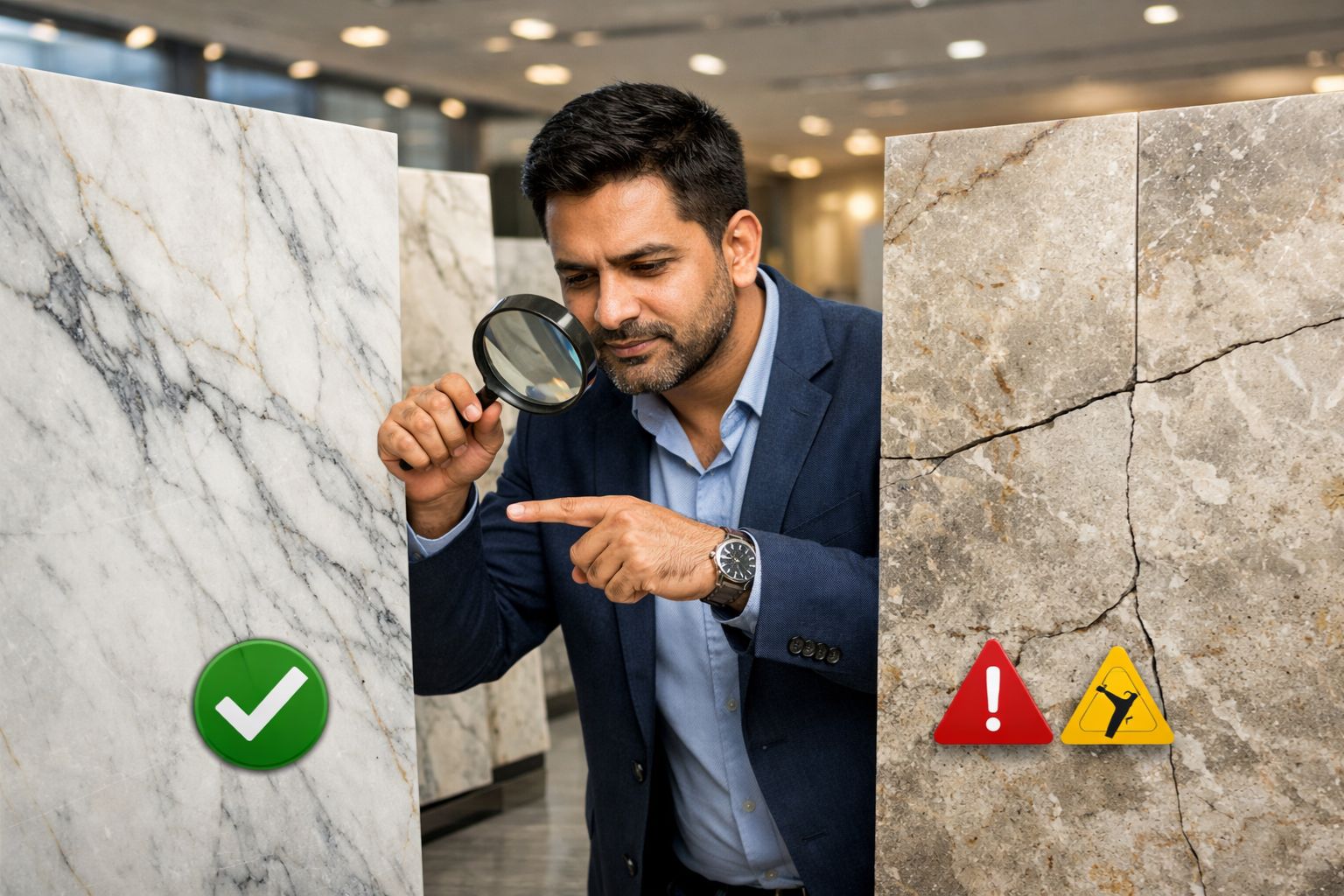
Marble has long been a symbol of luxury, elegance, and timeless beauty. Among the premium marble varieties, Turkish marble has gained immense popularity worldwide due to its stunning white tones, unique veining, and high-quality finish. However, as demand has grown, so has the risk of scams and fake marble products in the market.
In this comprehensive guide, stone industry expert Ankit Singhal shares insights into how buyers can differentiate real Turkish marble from fake products, common scams in the industry, and smart buying tips to ensure a safe purchase.
Table of Contents
- Introduction: The Allure of Turkish Marble
- Understanding Turkish Marble Varieties
- How Scammers Target Marble Buyers
- Key Differences: Real vs Fake Turkish Marble
- Buying Tips from Stone Expert Ankit Singhal
- How to Verify Turkish Marble Authenticity
- Red Flags to Watch Out For
- Frequently Asked Questions (FAQs)
- Contact Us
1. Introduction: The Allure of Turkish Marble
Turkey is renowned for its high-quality marble, particularly the white marble varieties like Mugla White, Afyon White, and Crema Marble. Turkish marble is prized for:
- Luxurious look – smooth texture and bright white tones
- Durability – strong and long-lasting even in high-traffic areas
- Versatility – suitable for flooring, countertops, wall cladding, and décor
However, the rising demand for Turkish marble has also attracted unscrupulous sellers who market fake or low-quality marble at premium prices. Many buyers, unaware of the differences, end up paying more for marble that doesn’t meet their expectations.
2. Understanding Turkish Marble Varieties
Before buying, it’s crucial to know the popular Turkish marble types:
- Mugla White Marble – Pure white with subtle veins, highly polished.
- Afyon White Marble – Creamy white tones with natural patterns.
- Crema Marble – Beige-white marble ideal for elegant interiors.
- Bursa Beige Marble – Light brownish marble for classic décor.
Each type has distinct characteristics in color, veining, and finish, which can help identify authenticity.
3. How Scammers Target Marble Buyers
The marble industry is highly lucrative, and scams are unfortunately common. Here’s how scammers operate:
- Mixing real and fake marble – Sellers may add low-grade or dyed stone to real marble slabs.
- Mislabeling marble origin – Fake Turkish marble is sold as imported high-grade marble.
- Overpricing low-quality marble – Some unscrupulous sellers charge premium prices for substandard products.
- Selling processed or artificial stone as natural marble – Buyers often cannot detect this without expert advice.
Tip from Ankit Singhal: “Many buyers are deceived by the marble’s appearance. It’s not just about color—it’s about texture, weight, and durability. Always verify authenticity before purchase.”
4. Key Differences: Real vs Fake Turkish Marble
Here’s how to differentiate real Turkish marble from fake alternatives:
| Feature | Real Turkish Marble | Fake / Low-Quality Marble |
|---|---|---|
| Color | Natural, consistent tones | Uneven, overly bright or dull |
| Veining | Smooth, natural patterns | Repetitive or unnatural veining |
| Weight | Heavier due to density | Lighter, less dense |
| Scratch Test | Hard and resistant | Scratches easily |
| Water Absorption | Low, does not stain easily | High, absorbs water quickly |
| Price | Premium but justified | Cheap or overpriced for low quality |
Pro Tip: “Always perform a water test and scratch test for marble slabs,” says Ankit Singhal. “A few drops of water on real marble won’t absorb quickly, while fake or low-quality stone will.”
5. Buying Tips from Stone Expert Ankit Singhal
Buying Turkish marble doesn’t have to be complicated if you follow these expert tips:
- Buy from trusted suppliers – Look for established brands with verified customer reviews.
- Ask for origin documentation – Authentic Turkish marble comes with export and quality certificates.
- Inspect slabs physically – Check texture, weight, and veining before finalizing the purchase.
- Request a sample – Small pieces can help you confirm color consistency and polish.
- Avoid deals that are “too good to be true” – Extremely low prices are often a red flag.
- Check for uniformity – Real Turkish marble has natural variations, but fake stone often looks overly uniform.
- Consult industry experts – Experts like Ankit Singhal can guide buyers in selecting the best marble without scams.
“Knowledge is your best protection. Understand the product, verify the supplier, and trust your instincts,” says Ankit.
6. How to Verify Turkish Marble Authenticity
Verification is essential, especially when dealing with high-value imports. Here are methods to confirm authenticity:
- Visual Inspection – Check for natural patterns and color depth.
- Scratch & Hardness Test – Use a knife to test hardness; real marble is durable.
- Acid Test – Apply a few drops of vinegar; real marble reacts slowly, fake marble reacts quickly.
- Water Absorption Test – Place water on the slab; real marble absorbs less.
- Supplier Verification – Ask for certificates, invoices, and origin documents.
Note: Always request verification before placing bulk orders to avoid losses.
7. Red Flags to Watch Out For
Here are common warning signs of fake Turkish marble:
- Unrealistically low prices compared to market rates
- Lack of certificates or origin proof
- Overly perfect slabs without natural veining
- Pushy sales tactics or pressure to buy quickly
- Unreliable delivery timelines or inconsistent quality
Tip: A trusted supplier will never rush your decision. Authenticity, quality, and transparency are always prioritized.
8. Frequently Asked Questions (FAQs)
Q1. How can I tell if Turkish marble is real?
A: Check color, veining, hardness, weight, and water absorption. Request origin documentation and samples.
Q2. Are all Turkish marble varieties suitable for flooring?
A: Yes, but some, like Mugla White and Afyon White, are better for high-traffic areas due to durability.
Q3. Can I trust online marble sellers?
A: Only if they provide certifications, verified reviews, and offer physical samples. Avoid deals that are too cheap.
Q4. How much does Turkish marble cost on average?
A: Prices vary depending on quality, type, and thickness. Always compare with verified suppliers.
Q5. Can fake marble damage my interior over time?
A: Yes, low-quality or fake marble may crack, stain, or degrade faster, costing more in maintenance.
9. Contact Us
For authentic Turkish marble purchases, expert guidance, and advice on avoiding scams, reach out to:
Stone Expert: Ankit Singhal
Phone: +91 92521 01111
Email: ceo@shreeramexpo.in
Book: The Secrets of Marble Industry – A comprehensive guide for marble buyers and enthusiasts.
Conclusion:
Turkish marble is a stunning and luxurious material, but buyers must be vigilant to avoid scams. By understanding marble types, performing simple tests, and consulting experts like Ankit Singhal, you can enjoy the elegance of genuine Turkish marble without compromising quality or authenticity.