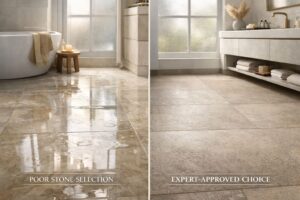
The marble industry in India has seen remarkable growth over the past few decades. With the rise in luxury homes, hotels, and commercial projects, imported Italian marble has become a symbol of elegance and sophistication. However, not everything that shines is genuine. One of the major concerns in the Indian marble market today is the use of fake Italian names to sell local or low-quality marble at premium prices.
In this comprehensive guide, stone expert Ankit Singhal shares insights on identifying fake Italian marble names, the risks involved, and tips for buyers to ensure they get authentic products.
Why Italian Marble is Highly Valued in India
Italian marble is prized for its unique patterns, fine texture, and natural beauty. Popular types like Carrara, Statuario, Calacatta, and Botticino are frequently imported and used in luxury projects.
Key Features of Genuine Italian Marble:
- Unique Veining: Each slab has natural, unpredictable veining patterns.
- High Durability: Italian marble has a dense structure, making it strong and long-lasting.
- Polish and Finish: Authentic Italian marble has a smooth, lustrous finish that enhances interior aesthetics.
- Premium Price: Imported marble is expensive due to quarrying, shipping, and import duties.
The high demand and premium pricing have unfortunately created a market for fake Italian names in India.
How Fake Italian Names Are Used in India
Many suppliers in the Indian marble market attach Italian-sounding names to local or Chinese marble to make it appear premium. These names often resemble famous Italian marble brands or quarries.
Common Tactics:
- Slight Name Alterations:
Example: “Carrera” instead of “Carrara,” or “Statuario Nova” instead of “Statuario.” - Italian-Sounding Prefixes:
Using terms like “Italiano,” “Roma,” or “Venetian” to create a perception of authenticity. - Copycat Branding:
Slabs are packaged and marketed in a way that mimics Italian marble suppliers’ branding. - Misleading Catalogs and Labels:
Fake Italian marble often comes with fake certificates or photos showing “Italian origin.”
Risks of Buying Marble with Fake Italian Names
Buying marble with fake Italian names can lead to several problems, from financial loss to construction issues:
- Lower Quality: Local marble may be less dense, prone to scratches, and have inconsistent patterns.
- Durability Issues: Inferior marble can crack or stain easily, especially in high-traffic areas.
- Loss of Investment: Premium prices paid for fake Italian marble don’t reflect the true value of the material.
- Aesthetic Disappointment: Fake marble may not have the same elegance, veining, or finish.
Ankit Singhal emphasizes: “Investing in fake Italian marble is like buying a designer bag knockoff — it may look similar at first, but the quality and longevity are never the same.”
How to Identify Fake Italian Marble
Stone expert Ankit Singhal recommends several practical tips for buyers:
1. Check the Name Carefully
Compare the name on the slab or invoice with internationally recognized Italian marble types. Be wary of slight misspellings or unusual additions like “Premium Italian” or “Super Calacatta.”
2. Ask for Origin Certificates
Genuine Italian marble comes with quarry certificates confirming the origin. If a supplier cannot provide this, be cautious.
3. Inspect the Veining
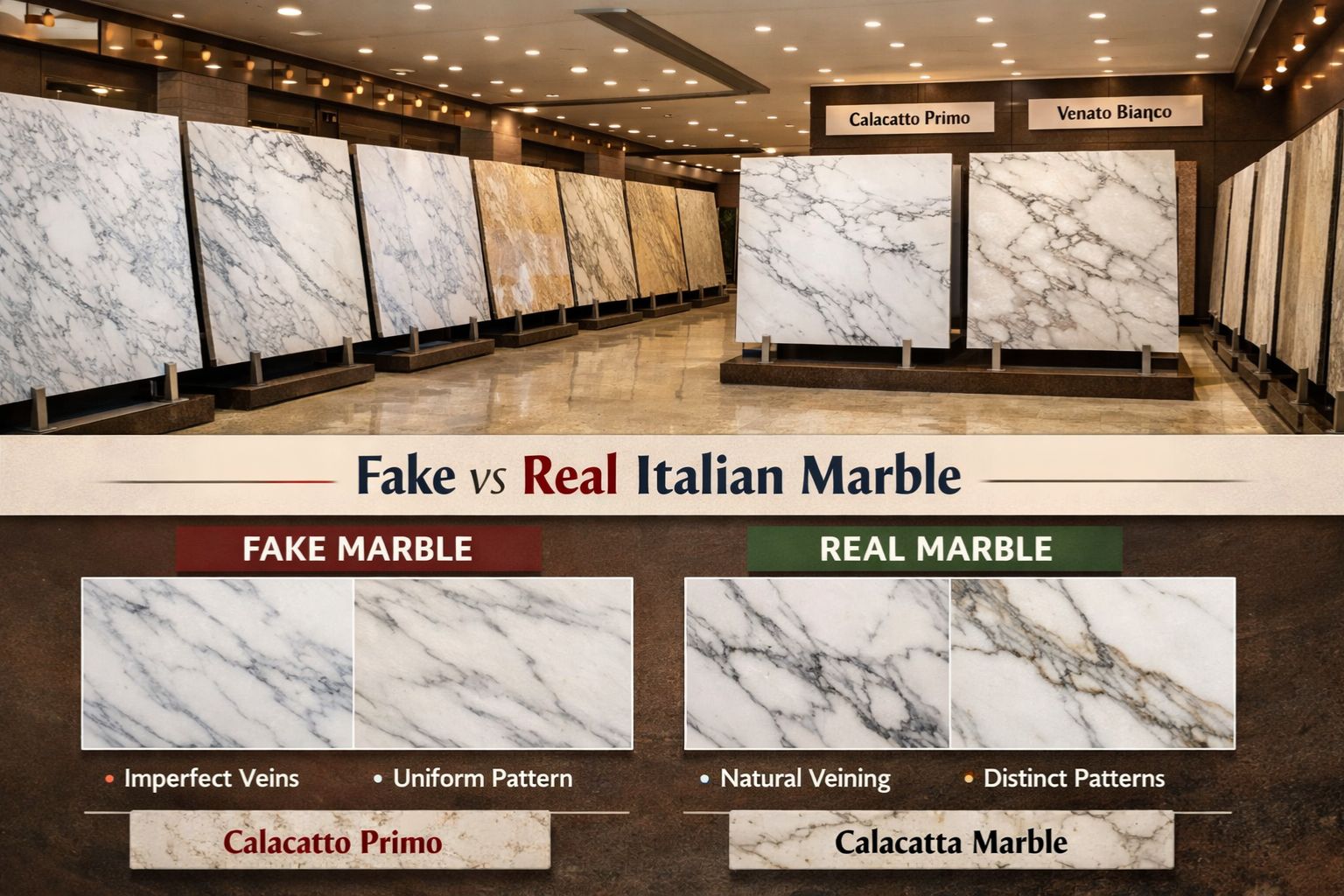
Authentic Italian marble has natural, irregular veining. Uniform patterns or repeated designs often indicate printed or low-quality local marble.
4. Test the Density and Porosity
Italian marble is dense and less porous. A simple water test can help: a few drops of water should not be absorbed quickly.
5. Observe the Finish
Authentic marble has a luxurious polish and smooth surface. Rough edges, inconsistent gloss, or dull slabs are red flags.
6. Compare Prices
If the price is too good to be true, it usually is. Genuine imported Italian marble involves high shipping and import costs.
Popular Fake Italian Names in India
While there are countless fake names circulating, some commonly misused names include:
- Carrera Marble (instead of Carrara)
- Statuario Nova
- Calacatta Premium
- Roma White
- Venetian Beige Marble
Ankit Singhal advises: “Always do research before purchasing. Even established suppliers sometimes use fancy names to attract buyers.”
Tips for Buyers: How to Ensure You Buy Genuine Italian Marble
1. Work with Reputable Suppliers
Choose suppliers with verified import history and authentic certificates. A trustworthy supplier will provide:
- Authentic Italian certificates
- Detailed product information
- Transparent pricing
2. Visit Showrooms or Warehouses
Inspect slabs personally. Visual checks for veining, color consistency, and finish are essential.
3. Seek Expert Guidance
Hiring a marble expert for inspections can save thousands in the long run. Experts like Ankit Singhal provide authentic assessments before purchase.
4. Verify Online Reviews and References
Check the supplier’s reputation online. Genuine reviews from architects, builders, and interior designers are good indicators.
5. Educate Yourself on Italian Marble Types
Knowing the characteristics of Carrara, Statuario, Calacatta, and Botticino helps in spotting fake names.
Case Study: A Real-Life Example
A luxury villa project in Delhi aimed to install Calacatta Gold Marble. The client initially purchased from a local supplier who claimed “Italian Calacatta Supreme.” Upon inspection, the veining was repetitive, and the slabs were softer than expected.
After consulting Ankit Singhal, the client sourced authentic Italian marble from a verified importer. The difference was clear:
- Original Calacatta: Luxurious, natural veining, durable, polished finish
- Fake “Calacatta Supreme”: Uniform pattern, low-density, prone to scratches
The client avoided potential long-term repair costs and achieved the aesthetic they desired.
FAQs About Fake Italian Marble
Q1: Can local marble ever match Italian marble in quality?
A: While India produces excellent marble, it cannot replicate the unique veining and density of Italian marble. Local marble can be beautiful but should not be marketed under fake Italian names.
Q2: Are there legal consequences for using fake Italian marble names?
A: Misrepresentation can lead to legal action under consumer protection laws, but enforcement varies. Always buy from trusted sources.
Q3: How much more expensive is genuine Italian marble in India?
A: Imported Italian marble can be 2–3 times costlier than premium local marble due to import duties, shipping, and quarry charges.
Q4: Can I test authenticity at home?
A: Simple tests like checking density, porosity, and veining patterns can help, but expert guidance is recommended for high-value purchases.
Q5: Are online suppliers reliable?
A: Some are, but online-only suppliers may exaggerate claims. Always verify certifications and, if possible, inspect slabs in person.
Conclusion
The Indian marble market is booming, but buyers need to be cautious of fake Italian names. With the guidance of stone experts like Ankit Singhal, and by following simple verification steps, you can ensure that your investment is genuine and long-lasting.
Always remember: Beauty and quality cannot be faked. Authentic Italian marble offers unmatched elegance, durability, and value.
By educating yourself, working with reputable suppliers, and inspecting products carefully, you can avoid scams and make a purchase that truly enhances your home or project.
Contact Us:
📞 +91 92521 01111
📧 ceo@shreeramexpo.in
Our Book: THE SECRETS OF MARBLE INDUSTRY